DNK International
 By Xavier Lugaga,Busia.
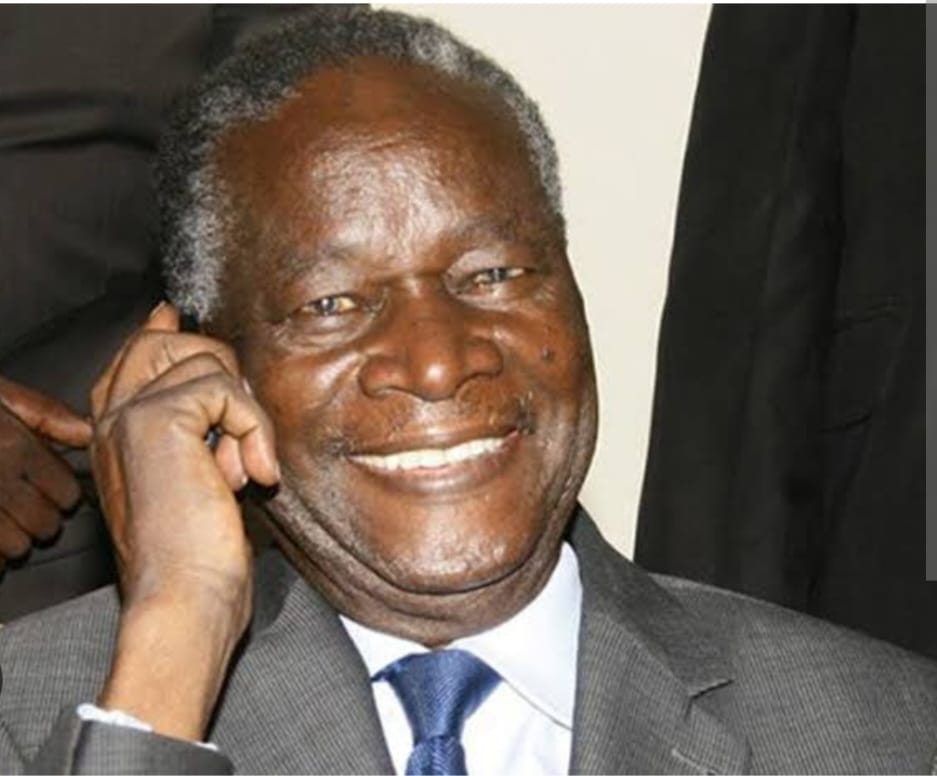
The death of Nicholas Biwott on July 11, 2017 marked the close of a chapter in Kenya’s history one defined by political clout, vast business interests, and influence during the era of Daniel Arap Moi.
Known as one of the most powerful figures of his time, Biwott left behind not only a formidable legacy but also a sprawling estate and a complex family structure.
In a move aimed at preventing disputes, his will signed on January 19, 2017 outlined an equal distribution of wealth among his children.
It was a deliberate attempt to maintain order in death, a rarity in high profile estates often plagued by legal wrangles.
Yet, amid this carefully structured plan, one decision stood apart.
Rita Field-Marsham, one of Biwott’s daughters, chose to walk away from her share of the inheritance.
On December 18, 2017, she formally filed a legal disclaimer renouncing all rights, title, and interest in her father’s estate.
There were no public declarations, no court battles, and no family drama,just a quiet, definitive legal act.
In Kenya, where inheritance disputes frequently dominate headlines, her decision was both rare and striking.
Born to Biwott and his Dutch wife Johanna, whom he met during his university years in Australia, Rita grew up between cultures, balancing privilege with discipline.
Her academic journey took her to McGill University in Canada, where she earned her undergraduate degree and met her future husband, Charles Field-Marsham.
Upon returning to Kenya, she built a distinguished legal career, serving as a prosecuting counsel in the Attorney General’s office before founding her own firm, Field-Marsham & Co. Advocates.
Her work extended beyond commercial law into public service, including active involvement with the Law Society of Kenya and legal aid initiatives.
Beyond the courtroom, her influence has been strongly felt in philanthropy and education.
Through initiatives such as Knowledge Empowering Youth (KEY) and the Charles Field-Marsham Foundation, she has championed access to education and opportunity.
Her role in the Kenya Scholar Athlete Program has helped over 130 Kenyan students secure opportunities in some of the world’s most prestigious institutions.
Against this backdrop, her decision to decline her inheritance takes on deeper meaning.
It was not rebellion, nor a rejection of family ties, but a deliberate assertion of independence,an act rooted in self definition.
By directing that her forfeited share be redistributed among her siblings, she preserved the integrity of her father’s wishes while stepping away from the wealth itself.
In the years since, there has been no indication of regret or reversal, as she continues to focus on her legal work, philanthropy, and youth empowerment.
The silence surrounding her decision has only amplified its significance.
In a society where wealth accumulation is often equated with success, Rita Field-Marsham’s choice challenges deeply held assumptions about legacy and identity.
Whether driven by personal conviction, philosophy, or a desire for independence, her action stands as a rare example of restraint in a landscape often defined by accumulation.
In walking away from immense wealth, she did not diminish her place in her father’s legacy,she redefined it, showing that true power can sometimes lie in the ability to let go.
Want to be featured? or have a personality want to know about him or her:
📞WhatsApp: ±2540703633820,±254754168624
✉️ Email: dailynewskenya0@gmail.com
🗓️ [DNK-International@April
15,2026]