DNK International
 By Our Correspondent,Ngong
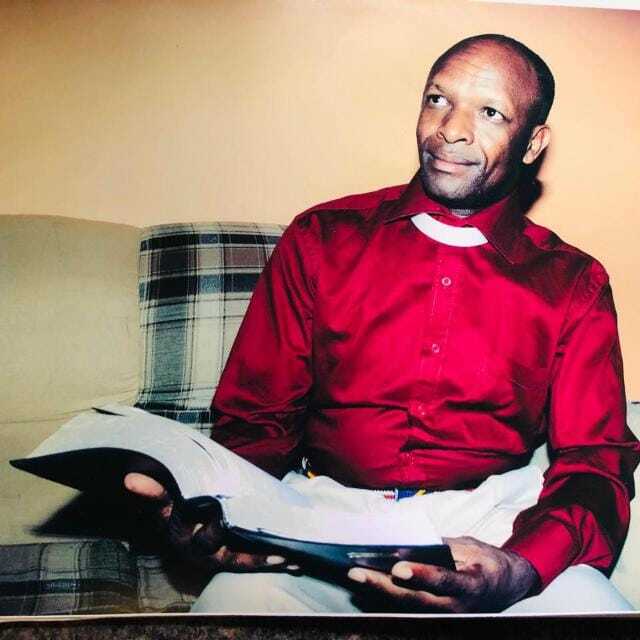
Veteran Kiswahili scholar, author and language champion Wallah bin Wallah has risen from humble beginnings in western Kenya to become one of the most respected figures in the promotion of Kiswahili in Kenya, East Africa and beyond.
Wallah was born in 1952 in Nyando, Kisumu County.
The renowned language expert has spent decades shaping the way Kiswahili is taught, spoken and appreciated in schools, media and literary circles.
Born as Wallah Ndedah, he later adopted the name Wallah bin Wallah as part of his literary identity,told Daily News Kenya-International a few months back that he believed that a more neutral Swahili name would allow his works to be accepted widely across different cultures and regions.
His childhood was shaped by constant movement across East Africa due to his father’s work with the railway system, an experience that exposed him early to different cultures and languages.
That multicultural exposure played a key role in nurturing his deep love for Kiswahili, which later became his life’s mission.
Wallah began his early education in Tanzania before continuing with his studies in Kenya.
His academic journey, however, was far from easy.
Financial hardship forced him to temporarily drop out of school, and at one point he survived by selling fish, vegetables and groundnuts to raise school fees.
Despite these struggles, he remained determined to complete his education and pursue his passion for language.
His dedication eventually led him to enroll in teacher training, where he specialized in Kiswahili education.
He later advanced his studies in language and literature in East African institutions, strengthening his expertise in Kiswahili grammar, poetry, literature and linguistics.
The knowledge he gained during these years laid the foundation for his long career as a teacher, writer and language mentor.
Wallah began his professional career as a Kiswahili teacher in several secondary schools across Kenya.
While teaching, he noticed that many students struggled to understand the language because textbooks were often too complex.
Determined to simplify learning, he began writing educational materials that explained Kiswahili grammar and composition in a clearer and more engaging way.
His breakthrough came when he authored the famous Kiswahili Mufti textbook series, which later became one of the most widely used Kiswahili learning resources in Kenyan primary schools.
The books simplified grammar rules, sentence construction and vocabulary, making Kiswahili more accessible to young learners.
The success of the series made Wallah bin Wallah a household name among teachers and students across Kenya.
Beyond textbooks, the scholar also ventured into creative writing, producing novels, poetry and short stories rich in classical Swahili expression.
His literary works often explore themes of morality, society, justice and African cultural values.
Through these writings he demonstrated the beauty and depth of Kiswahili as both a language of education and artistic expression.
His influence has extended beyond the classroom and literary world.
Wallah founded the Wasta Kiswahili Centre in Ngong, a cultural and language training institution dedicated to nurturing Kiswahili writers, poets and speakers.
Through the centre he has mentored young scholars and organized events aimed at promoting the language across East Africa.
The institution also sponsors the Wasta Kiswahili Awards, which recognize individuals contributing to the growth of Kiswahili.
In recent years, the veteran linguist has also become a familiar voice in Kenyan media, where he analyzes and discusses Kiswahili language issues.
His expertise has seen him featured as a Kiswahili programme analyst on Radio 47, where he participates in educational discussions every Saturday morning, explaining grammar, idioms, proverbs and the proper use of Kiswahili in modern communication.

The programme has attracted a large audience of students, teachers and language enthusiasts who admire his deep knowledge and clear explanations.
Fellow Kiswahili scholars often describe Wallah bin Wallah as a “living dictionary” of the language.
Many praise his ability to simplify complex linguistic concepts and to connect traditional Swahili poetry with modern everyday communication.
Educators across East Africa credit his textbooks with helping thousands of students improve their Kiswahili skills, while writers say his works inspired them to embrace the language in literature.
Throughout his career, Wallah has also been recognized with several awards and honors from language and cultural organizations for his contribution to the promotion of Kiswahili.
These recognitions celebrate his role in strengthening Kiswahili as a unifying African language and as a key tool for education, communication and cultural identity.
Among his memorable sayings that continue to inspire language learners is the statement:
“Kiswahili si lugha tu, ni daraja la kuunganisha watu.”
(Translation: Swahili is not just a language; it is a bridge that unites people.)
Another phrase often quoted in his lectures is:
“Ukifahamu lugha, umefungua mlango wa maarifa.”
(Translation: When you master a language, you open the door to knowledge.)
Today, the respected scholar remains a devoted family man, married and a father of six children.
Even in his seventies, he continues to mentor young writers, participate in language forums and advocate for the wider use of Kiswahili across Africa.
His life story,from selling fish to becoming one of the region’s most influential Kiswahili scholars,stands as a powerful testament to determination, education and the enduring power of language.
Want to be featured? or have a personality want to know about him or her:
📞WhatsApp: +254703633820,+254754168624
✉️ Email: dailynewskenya0@gmail.com
🗓️ [DNK-International@March14,2026]