DNK International
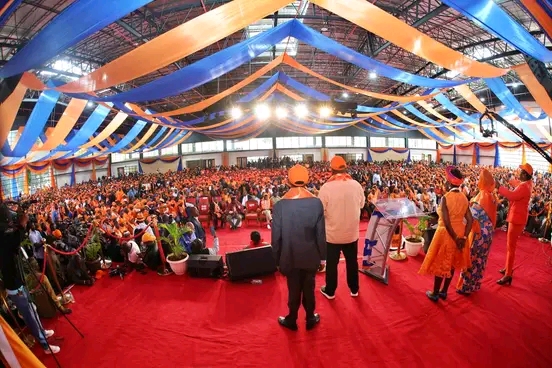
 The elevation of Oburu Odinga to a senior leadership position within the Orange Democratic Movement (ODM) comes against the backdrop of a high-stakes National Delegates Conference (NDC) held today at Nairobi’s Jamhuri Grounds. The gathering, marked by charged political energy, competing narratives, and a show of force by rival factions, underscored the delicate moment ODM finds itself in as it seeks to project unity while managing internal contestation.
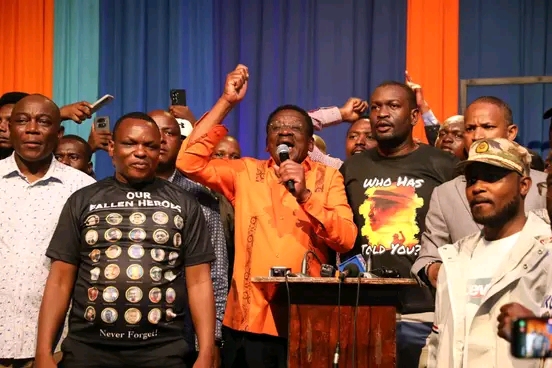
At the same time, a parallel show of defiance unfolded across the city, where Edwin Sifuna convened a rival forum at Ufungamano House, christened the “People’s NDC.” The meeting, attended by key figures including Jimmy Orengo, Godfrey Osotsi, and Babu Owino, laid bare the simmering divisions within ODM. Their parallel gathering was not just symbolic—it signaled an emerging faction determined to challenge the party’s current power structure and redefine its future direction.
At one level, Oburu Odinga’s election reflects a deliberate choice for stability. He is not just a seasoned politician; he is a long-time insider with deep institutional memory and unwavering loyalty to the party’s core ideals. His elevation reassures ODM’s traditional support base that the party remains grounded in its founding principles under the broader influence of Raila Odinga. In a political environment often marked by shifting alliances and uncertainty, such continuity can be a source of strength.
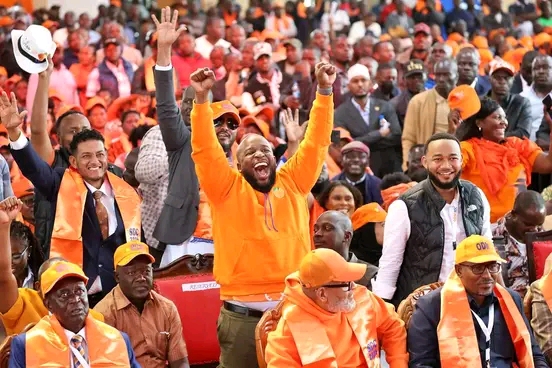
However, this decision also reopens an old debate—one that ODM has struggled to convincingly address: the question of internal democracy and generational transition. By elevating a figure closely associated with the party’s historical leadership, ODM risks reinforcing the perception that power remains concentrated within a familiar circle. For a party that commands significant youth support, this could gradually alienate emerging leaders eager for space and recognition.
The timing of Oburu’s rise is equally critical. ODM has, in recent months, experienced visible internal strains, now dramatically illustrated by the parallel NDCs. His leadership could serve as a unifying bridge, offering steady hands to navigate these divisions. Yet, it could just as easily deepen fault lines if sections of the party feel excluded from the decision-making process.
Looking ahead to 2027, the stakes could not be higher. ODM is clearly recalibrating—prioritizing unity and experience over experimentation. Oburu Odinga’s networks, particularly in the party’s strongholds, may prove instrumental in mobilizing support and maintaining political relevance in an increasingly competitive landscape.
Still, the broader question remains: can ODM balance continuity with renewal? Kenyan politics is evolving, with a new generation of leaders reshaping the conversation around governance, accountability, and representation. If ODM is to remain a dominant force, it must find a way to integrate these fresh voices without undermining its established leadership.
In the end, Oburu Odinga’s election is both a statement of intent and a test. It signals a party leaning on its past to secure its future—but whether that strategy will hold amid visible internal rebellion is a question only time will answer.
—DNK-International | March 27, 2026