DNK International
 By Our Reporter,Nairobi.
A three-judge bench that upheld the impeachment of former DP Gachagua has explained the discrepancy in the number of pages contained in the judgment
They attributed it to differences in formatting and font sizes used by the judges.
This arose during proceedings in a petition challenging the appointment of Deputy President Kithure Kindiki, filed by activist Joseph Aura.
Responding to concerns raised by lawyer Harrison Kinyanjui representing the petitioner over the variation in page numbers, presiding Judge Eric Ogola said the judgment shared with parties was 286 pages, while references had been made to a 350-page version.
Justice Ogola explained that judges often work with differently formatted copies of the same judgment, resulting in varying page counts.
“If you look at us here, we are people of different eyes. So when we are reading judgments, we are not bound by pages. Some will want a judgment of 10 pages with bigger spacing for them to read. Others will just read 10 pages. When I say that I’m reading a judgment of 10 pages, it depends on the font that I use and the strength of my eye,” said Justice Ogola.
The judges maintained that the 286-page judgment circulated to the parties was the official and valid decision of the court.
The bench, comprising Justices Ogola, Fredah Mugambi and Anthony Mrima, had upheld Gachagua’s impeachment, although it found that the Senate violated his constitutional right to a fair hearing.
The same bench also declined to recuse itself from hearing a petition challenging Kindiki’s nomination and appointment as Deputy President, despite objections from Kinyanjui, who argued that the judges had already handled matters relating to Gachagua’s impeachment.
The judges ruled that they would not entertain the recusal application and directed that the case proceed to full hearing.
The court further ordered that the matter be heard virtually, despite Kinyanjui’s opposition. The lawyer argued that his client preferred the case to be heard in open court under Article 50(2)(d) of the Constitution.
Aura is challenging Kindiki’s nomination and subsequent appointment as Deputy President, arguing that the process did not comply with constitutional requirements.
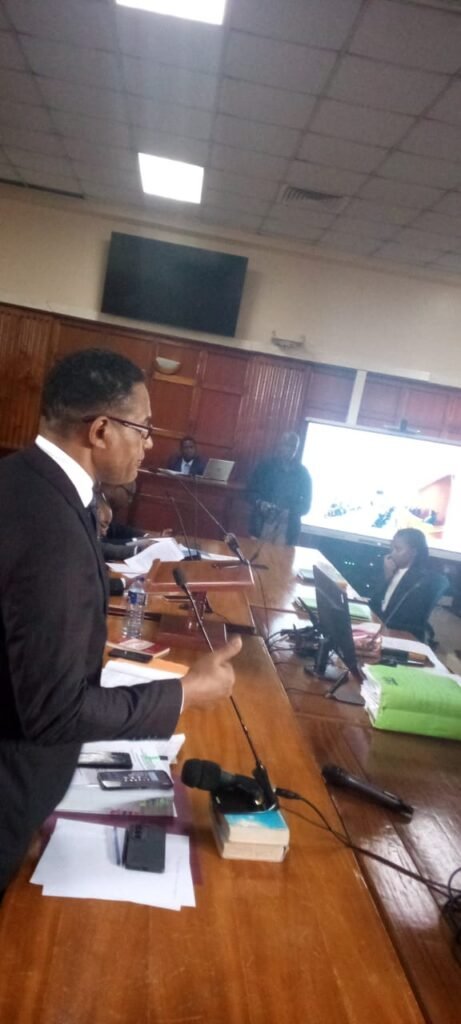
Through Kinyanjui, Aura contends that Kindiki was neither constitutionally nominated nor lawfully appointed and should therefore be barred from exercising the powers of the office of Deputy President.
He further argues that the swearing-in ceremony conducted on November 1, 2024, in the presence of the President and Chief Justice Martha Koome, was null and void from the outset.
Aura also questions the legality of the declaration of November 1, 2024, as a public holiday through Gazette Notice No. 14100, claiming that the declaration was made by an official without the requisite legal authority.
Additionally, he challenges the legality of Executive Order No. 5 of 2024, through which Prime Cabinet Secretary Musalia Mudavadi was allegedly appointed in an acting capacity to head the Interior Ministry, arguing that the actions were undertaken in circumstances that lacked transparency and constitutional compliance.
[DNK-International@June 19,2026]