DNK International
By Wycliffe Omondi, Political Commentator.
The recent remarks by Principal Secretary for Interior Raymond Omollo suggesting that the Luo community should support President William Ruto’s re-election unconditionally raise fundamental questions about political representation, accountability and coalition building ahead of the 2027 General Election.
No government official can unilaterally commit an entire community to a political arrangement, just as no individual should claim the authority to determine the Orange Democratic Movement’s (ODM) negotiating position outside its legitimate party structures.
ODM is not a Luo community project or the personal property of a handful of politicians.
It is a national political movement built through decades of struggle, sacrifice and grassroots mobilisation, with supporters across the Coast, Western Kenya, Nairobi, the Rift Valley, Mount Kenya and other parts of the country.
Reducing the party to an ethnic bargaining tool undermines the contributions of millions of Kenyans who have supported it over the years.
Omollo is a Principal Secretary and public servant, not an elected ODM official.
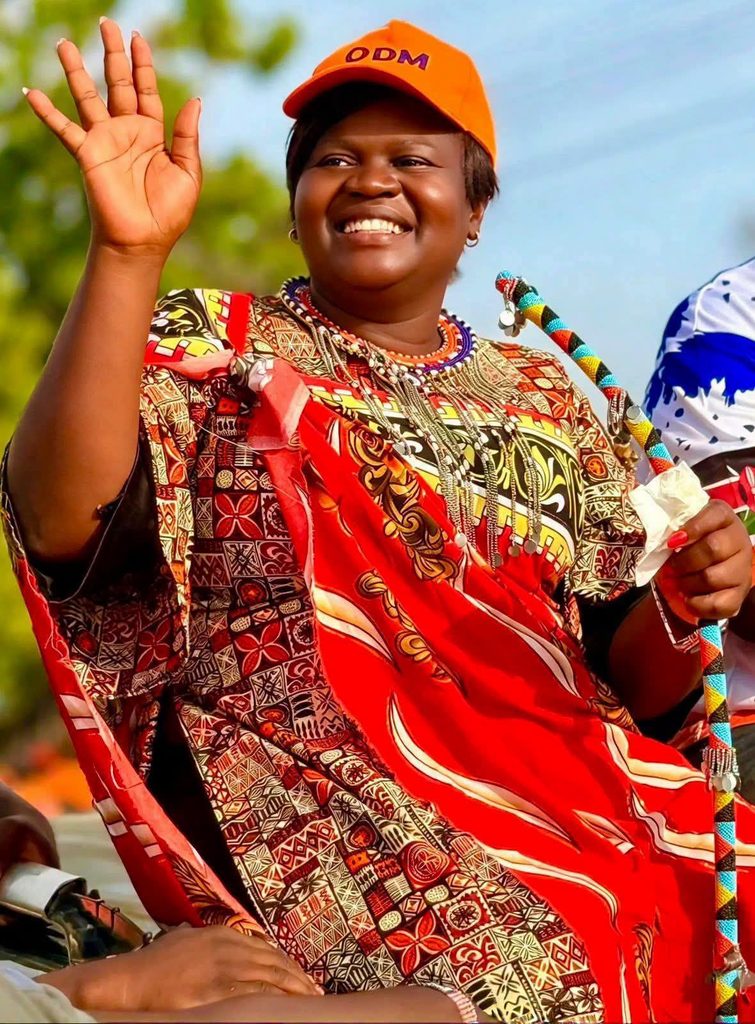
His position in government does not automatically grant him the mandate to negotiate on behalf of the party or declare the political choices of the Luo community.
The authority to determine ODM’s position in any prospective coalition must rest with its recognised leadership, party structures and members.
ODM National Chairperson Gladys Wanga has emphasised equitable power sharing, while party leader Oburu Oginga has spoken about the need for structured coalition negotiations.
Their positions raise a legitimate question: what would ODM gain from supporting Ruto’s re-election, and what concrete commitments would the President make to the party and its supporters?
Political loyalty should never be treated as a blank cheque.
A serious political party must be able to negotiate its policy priorities, participation in government and commitments that can improve the lives of its supporters.
Unconditional support risks weakening ODM’s bargaining power before negotiations even begin.
Any prospective partnership must recognise each side’s contribution, electoral influence and legitimate interests.
President Ruto should also recognise that ODM’s political influence cannot simply be replaced through government appointments, development promises or attempts to cultivate competing political centres.
Western Kenya, like every other region, has politically conscious voters with their own aspirations and democratic choices.
Attempts to undermine established party structures or assume that voters can be redirected at will risk creating resentment, divisions and voter apathy.
A weakened political partner does not necessarily produce a stronger coalition.
Sustainable alliances are built through mutual respect, consultation and credible commitments, not by diminishing the influence of potential partners.
The question of a written agreement between ODM and Ruto’s political formation is therefore central to the debate.
Although personal understanding and political goodwill can help establish relationships, they are not substitutes for clear, documented commitments.
A written agreement can define the coalition’s objectives, decision making arrangements, distribution of responsibilities and mechanisms for resolving disputes.
Kenya’s Political Parties Act provides a framework for coalition agreements and their submission to the Registrar of Political Parties, subject to applicable legal requirements and timelines.
ODM’s leadership should ensure that any prospective agreement complies with the relevant law and clearly establishes the obligations of each party.
A written pact should not be interpreted as an act of hostility or mistrust.
Rather, it offers a basis for accountability and helps prevent political commitments from depending entirely on personal relationships between individual leaders.
For ODM, the issue is not simply whether to support Ruto in 2027, but whether the terms of any partnership reflect the party’s contribution and the aspirations of its supporters.
Equally important is the distinction between political bargaining and the government’s responsibility to deliver public services.
Roads, hospitals, schools, water infrastructure and economic opportunities are not rewards for political loyalty.
They are essential public services that should be provided fairly to all Kenyans, regardless of their political affiliations.
ODM supporters, like other citizens, have a right to demand policies that address unemployment, economic hardship, inadequate public services and regional inequalities.
Any coalition agreement should therefore go beyond distributing government positions among political elites.
The ultimate test of a political partnership must be its impact on ordinary citizens.
Wanga’s position on equitable power sharing should be considered within this broader context.
Whether the eventual arrangement adopts a 50-50 formula or another mutually acceptable framework is a matter for genuine negotiations between authorised representatives.
What matters is that the process is transparent, credible and consistent with the parties’ internal decision making procedures.
ODM should not be pressured into accepting terms its members consider inadequate, just as its potential partners retain the right to negotiate arrangements they can support.
However, the party’s leadership must also guard against turning negotiations into a contest over senior government positions.
Its agenda should prioritise economic empowerment, youth employment, regional inclusion, improved public services and equitable development.
A coalition that benefits political elites while leaving ordinary citizens struggling would defeat the very purpose of political representation.
Omollo must recognise the distinction between his public responsibilities and the independent political choices of parties and voters.
He is entitled to express his views within the applicable legal and administrative framework, but he cannot speak for an entire community or dictate the terms under which ODM should participate in a coalition.
The Luo community comprises citizens with diverse political opinions.
Its members have the constitutional right to support Ruto, oppose him, back another candidate or make independent electoral choices.
No individual should claim ownership of those decisions.
ODM, too, must recognise that its supporters are not a captive electorate.
The party must earn their confidence through democratic consultation, credible policies and responsible leadership while protecting its national character and strengthening its grassroots structures.
As Kenya approaches the 2027 General Election, President Ruto and his advisers should understand that attempts to weaken a potential coalition partner could undermine the very alliance they seek to build.
For its part, ODM must approach negotiations with unity, discipline and a clear policy agenda. Its leaders should insist on transparency, documented commitments and effective accountability mechanisms while ensuring that the interests of ordinary citizens are not sacrificed for political convenience.
Ultimately, the electorate will determine who deserves its support in 2027.
Neither government officials nor political leaders should assume that voters have already made that decision on their behalf.
ODM was built by the people and for the people.
Its future must be determined through democratic processes, and any political partnership it enters must be based on mutual respect, credible commitments and tangible benefits for citizens.
The message to Omollo and all political actors is clear: respect ODM’s independence, recognise the people’s right to choose their leaders and allow legitimate party structures to determine the terms of political engagement.
Political partnerships must be built on mutual respect, not political manoeuvres.
The people must remain at the centre of every negotiation.
Wycliffe Omondi is a political commentator.
[Daily News Kenya-International@October 29,2026]