DNK International
 By Our Reporter,Nairobi
As Kenya marks the 36th anniversary of the historic Saba Saba movement today, the name of the late Kenneth Njindo Matiba continues to stand out as one of the country’s most courageous champions of multiparty democracy.
His willingness to confront the authoritarian rule of former President Daniel Arap Moi at great personal cost helped shape Kenya’s democratic journey.
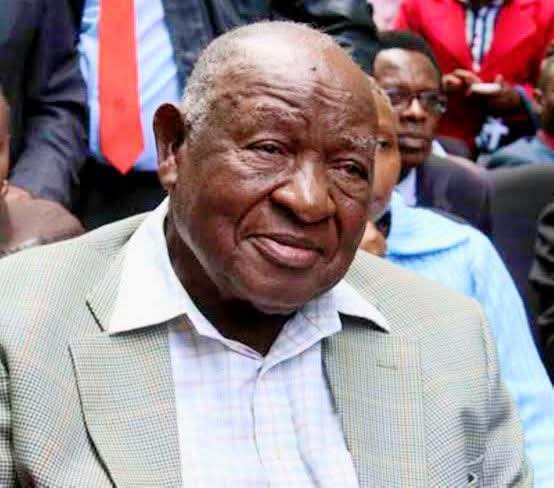
Matiba was born on June 1, 1932, in Kiharu, Murang’a County.
He was raised in a humble family before pursuing higher education abroad.
Matiba studied at Alliance High School before proceeding to the United Kingdom, where he attended the University of Nottingham and later the University of Cambridge, specializing in economics and public administration.
The education equipped him for a distinguished career in Kenya’s civil service and later in business and politics.
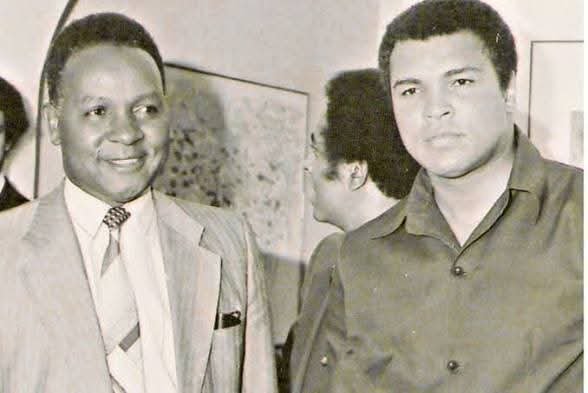
Matiba began his public service career shortly after independence, quickly rising through the ranks of the civil service before becoming one of Kenya’s youngest Permanent Secretaries.
He served as Permanent Secretary in the Ministry of Education, where he played a key role in expanding educational opportunities during the early years of independence.
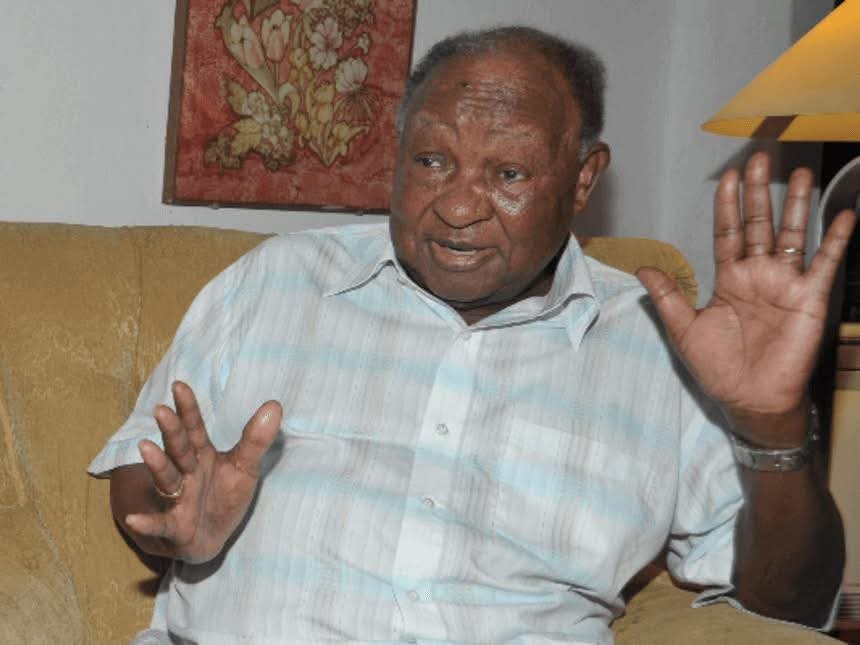
His administrative brilliance earned him recognition as one of the country’s most effective civil servants.
After leaving government service, Matiba joined Kenya Breweries Limited as Managing Director, where he transformed the company into one of East Africa’s most successful manufacturing firms.
His leadership skills in the corporate sector established him as one of Kenya’s leading businessmen and laid the foundation for a vast business empire spanning hospitality, agriculture, real estate and manufacturing.
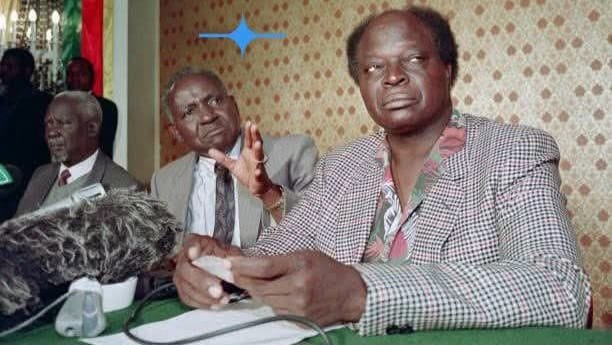
His entry into elective politics came in 1983 when he was elected Member of Parliament for Mbiri constituency in Murang’a county, later renamed Kiharu.
President Moi later appointed him Minister for Health and subsequently Minister for Transport and Communications.
During his tenure in Cabinet, Matiba was widely regarded as an energetic and reform oriented minister who pushed for efficiency in government.
However, relations between Matiba and President Moi deteriorated towards the late 1980s.
Matiba became increasingly critical of the one party political system under KANU, arguing that Kenya needed constitutional reforms, greater political freedoms and competitive elections.
His calls for democratic reforms placed him on a collision course with the Moi administration.
In May 1990, together with the late Charles Rubia, Matiba publicly demanded the reintroduction of multiparty democracy.
The two leaders announced plans to hold a pro-democracy rally at Kamukunji Grounds on July 7, 1990, a date that would later become known as Saba Saba Day.
Before the rally could take place, the government arrested both Matiba and Rubia, accusing them of threatening national security.
Their detention without trial sparked nationwide protests that were violently suppressed by security forces, leaving dozens dead, many injured and hundreds arrested.
Although the Kamukunji rally was disrupted, the arrests transformed Matiba into a national symbol of resistance against authoritarian rule.
While in detention, Matiba suffered a severe stroke after allegedly being denied timely medical attention.
The stroke left him permanently disabled, affecting his speech and mobility for the rest of his life.
Despite his deteriorating health, he remained steadfast in his belief that Kenya deserved democratic governance.
Following sustained domestic and international pressure, the Moi government repealed Section 2A of the Constitution in December 1991, restoring multiparty politics.
Matiba became one of the founding leaders of the Forum for the Restoration of Democracy (FORD), although leadership disputes later saw him establish FORD-Asili.
He contested the 1992 presidential election but opposition divisions enabled President Moi to retain power.
Nevertheless, historians who talked to DNK-International widely credit Matiba,as among the founders of Forum for Restoration of Democracy (FORD) alongside Charles Rubia, Jaramogi Oginga Odinga, Masinde Muliro, Philip Gachoka and Ahmed Bamahriz.
Together with other pro-democracy activists they are remembered for laying the foundation for Kenya’s democratic transformation.
Beyond politics, Matiba built one of the country’s largest private business empires.
His investments included hotels, commercial agriculture, manufacturing, real estate and publishing.
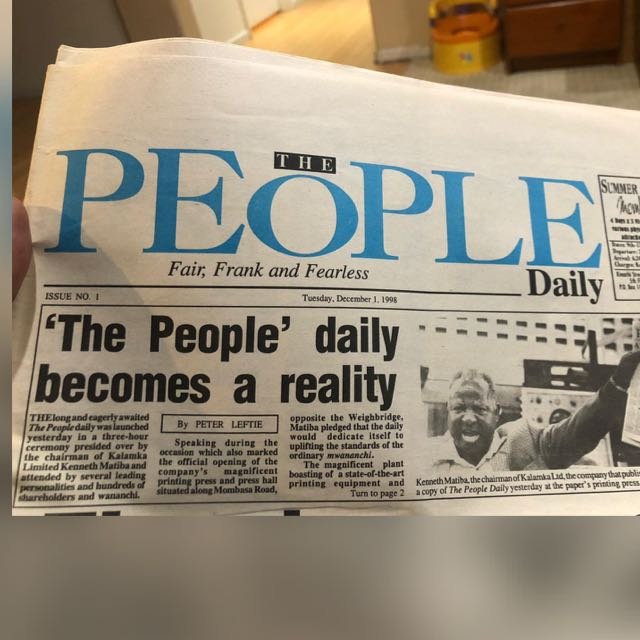
He established Kalamka Limited which published the People Daily newspaper before later on it was acquired by Kenyatta family through MediaMax Limited.
A former newspaper employee of the newspaper when it was weekly before it became daily one and who sought anonymity said that Matiba started the newspaper after some leading local newspapers refused to publish his paid up advertisements in fear of being targeted by the then KANU government.
Unlike many privately owned newspapers at the time, People Daily positioned itself as an independent publication that frequently highlighted governance issues and democratic reforms.
Years later, the newspaper would become one of Kenya’s leading national dailies but now its published online.
Despite his vast wealth, Matiba’s fortunes declined significantly after years of political persecution, mounting debts and prolonged legal disputes with creditors.
One of the most notable cases involved Barclays Bank of Kenya (ABSA), where he fought lengthy court battles over loan recoveries and attempts to auction some of his properties.
The legal battles became symbols of the financial hardships that befell one of Kenya’s wealthiest businessmen turned politician.
Over time, successive governments acknowledged Matiba’s sacrifices for democracy.
The administrations of Presidents Mwai Kibaki and Uhuru Kenyatta offered support through compensation and recognition of his role in Kenya’s democratic struggle, although many supporters argued that the assistance could never fully compensate for his personal suffering.
Following his stroke, Matiba who had formed another party SabaSaba Asili largely withdrew from active politics and spent much of his later years Jadini Beach Hotel in Diani, Kwale County, one of the properties he owned along Kenya’s South Coast.
There, he lived a relatively quiet life while occasionally receiving visitors, politicians and democracy activists who regarded him as a national hero.
Throughout his public life, Matiba became known for his uncompromising principles and memorable declarations on democracy.
Among his most quoted remarks was his insistence that “freedom is never given; it is fought for,” a statement that came to define his lifelong struggle against authoritarianism.
He also emphasised that when it comes to electing leaders “Let the people decide” through the ballot.
He consistently argued that no nation could prosper without protecting civil liberties, the rule of law and competitive politics.
Matiba married Edith Matiba, and together they raised five children Susan,Raymond,I’ve,Julie and Gitau.
His family remained by his side throughout his long illness and continued to defend his democratic legacy after his retirement from public life.
Matiba died on April 15, 2018, aged 85, after a long illness.
In accordance with his wishes, his body was cremated in Nairobi, making him one of the few prominent Kenyan political leaders to choose cremation over burial.
Leaders across the political divide described him as a fearless patriot whose sacrifices helped secure the freedoms that Kenyans enjoy today.
Thirty six years after the aborted Saba Saba rally, Kenneth Matiba’s legacy remains firmly woven into Kenya’s democratic history.
Though he paid with his health, wealth and political career, his determination inspired constitutional reforms that eventually ushered in pluralism, competitive elections and greater political freedoms.
As Kenyans commemorate another Saba Saba Day, Matiba is remembered not merely as a politician or businessman, but as one of the principal architects of modern Kenya’s democracy,a man who sacrificed personal comfort in pursuit of a freer nation.
Want to be featured? or have a personality want to know about him or her:
📞WhatsApp: ±2540703633820,±254754168624
✉️ Email: dailynewskenya0@gmail.com
🗓️ [DNK-International@July 7,2026]