DNK International
 By Our Reporter,Kitale
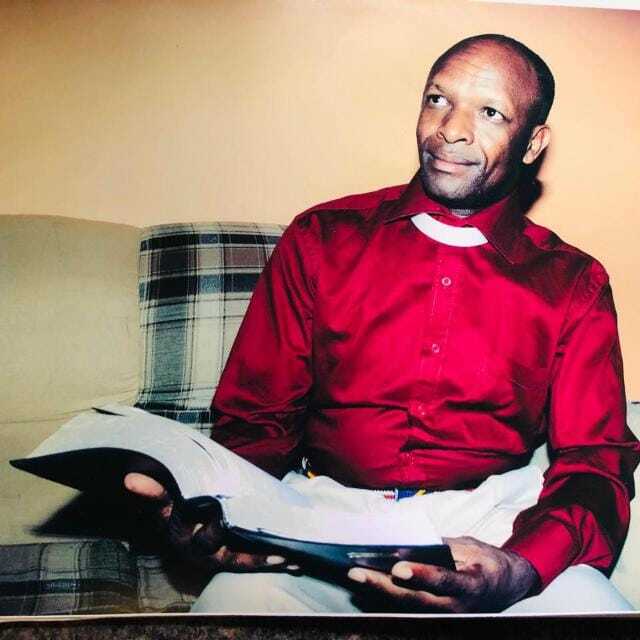
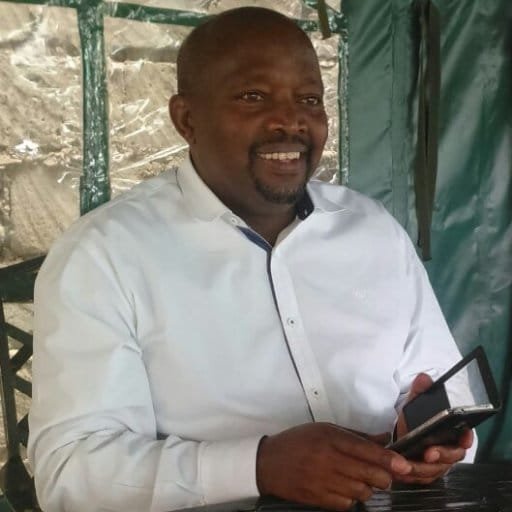
Kipruto Rono Arap Kirwa remains one of Kenya’s most intriguing political figures,a former Cherangany MP, Agriculture Minister and long time critic of powerful political establishments.
He has repeatedly demonstrated a willingness to break ranks with leaders once he believes they have departed from what he considers the national interest.
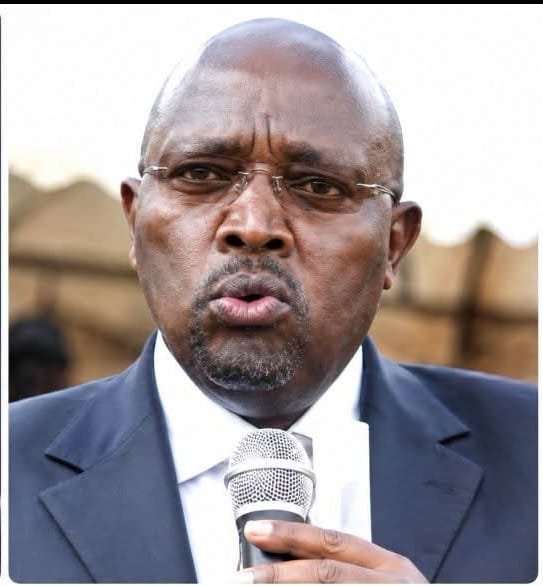
According to parliamentary records and biographical sources obtained by DNK-International, Kirwa is aged 66 years old.
His early life was shaped by displacement and education as his family moved to Tanzania when he was a child after his community was affected by colonial era land displacement, before eventually returning to Kenya.
He attended Kaplamai Primary School, Mang’u High School and later pursued agricultural engineering at what was then Jomo Kenyatta College of Agriculture and Technology.
Kirwa also undertook teacher training and later earned a Master of Arts in International Studies from the University of Nairobi and a Master of Science in Applied Management and Leadership from The Management University of Africa.
In 2022, he said he had completed coursework for a PhD in International Studies at the University of Nairobi.
Kirwa trained in agricultural engineering but began his working life in education.
Between 1986 and 1988 he taught and served as a headmaster at Tilol Secondary School in Uasin Gishu.
It was during this period that his political ambitions became increasingly pronounced.
A 1996 profile recorded him saying he had a “burning desire to be a politician”.
His entry into elective politics was dramatic.
In the 1988 election he attempted to contest the Cherangany parliamentary seat but complained that his nomination papers disappeared at KANU headquarters.
He subsequently emerged as a candidate in the by-election following the nullification of veteran politician Masinde Muliro’s election.
At just 33, Kirwa defeated the much older and nationally renowned Muliro and became Cherangany MP.
That victory placed him at the centre of the politics of the Rift Valley.
Although he entered Parliament through KANU, Kirwa quickly developed a reputation as an independent-minded politician who was prepared to challenge the establishment.
He was re-elected in 1992 and 1997 and later won again in 2002 on the NARC ticket, giving him a parliamentary career that stretched from 1990 to 2007/08.
His relationship with the late President Daniel arap Moi gradually deteriorated.
Kirwa was initially part of the KANU establishment but became increasingly vocal against what he considered authoritarianism and excessive concentration of power.
In 1996, he publicly criticised Moi as undemocratic, a stance that made him an unusual dissenter within the Kalenjin political establishment.
At one point he disappeared after openly challenging the regime, triggering concern from his family and political allies.
The break became even more pronounced in the late 1990’s when Kirwa joined youthful KANU rebels including Cyrus Jirongo, John Sambu and William Ruto (now President) in pushing for change inside the ruling party.
The group was described as part of the “Four Sisters”, a youthful faction challenging the older KANU establishment represented by figures such as Nicholas Biwott, George Saitoti and Joseph Kamotho.
Kirwa’s rebellion was not merely rhetorical.
He became associated with efforts to establish alternative political vehicles, including the United Democratic Movement, which the Moi administration was reluctant to register because it feared that a Kalenjin led alternative party could weaken KANU’s grip on the community.
His relationship with Moi became so strained that the President reportedly nicknamed him “Makokha”, a reference to Kirwa’s political links with the Luhya community in cosmopolitan Cherangany.
Kirwa himself recalled that Moi had once instructed him to keep Cherangany united, a message he later turned back on the President whenever Moi criticised his cooperation with opposition politicians.
His political rebellion also came with personal risks.
Kirwa was involved in a serious road accident near Kitale in which he broke a leg.
The incident occurred during a period when he was increasingly viewed as a troublesome figure by sections of the KANU establishment.
The late Mark Too later recalled Kirwa’s reaction to the accident and the suspicion that some political enemies might have wished him dead.
There is, however, no established evidence that the crash was politically orchestrated.
By 2 000, Kirwa had moved fully into the opposition and became involved in the National Alliance Party of Kenya, working closely with Mwai Kibaki and other opposition figures in the coalition building that eventually produced NARC.
His political journey therefore moved from being a KANU insider to becoming one of the politicians helping dismantle KANU’s dominance in the 2002 election.
Kibaki’s victory dramatically changed Kirwa’s fortunes.
He was appointed Minister for Agriculture in January 2003, succeeding Bonaya Godana, and served in the powerful docket until April 2008.
He became associated with agricultural reforms and efforts to revive state agricultural institutions, including the Agricultural Development Corporation.
After leaving Cabinet, Kirwa moved into diplomacy.
From 2008 to 2012 he served as Kenya’s Ambassador to Somalia and IGAD Special Envoy for Somalia Peace and National Reconciliation, taking part in efforts to address the country’s prolonged political and security crisis.
His own political career in elective office, however, had come to an end.
He lost the Cherangany parliamentary seat in the 2007 election to Joshua Kutuny, marking the beginning of a prolonged period outside Parliament.
The loss was particularly significant because Kirwa had previously held the seat for several election cycles and had established himself as one of the most recognisable political figures in the wider Trans Nzoia-Rift Valley region.
Kirwa subsequently attempted several political comebacks.
He sought the Trans Nzoia Senate seat in 2013 and again in 2017, but did not win.
In 2022 he once again contested the Trans Nzoia Senate seat, this time on the Amani National Congress ticket. Official IEBC records show that he received 40,777 votes, finishing behind Michael Maling’a Mbito, who garnered 71,471, and Henry Tiole Ndiema, who received 70,846.
Allan Chesang ultimately won the seat with 123,793 votes.
The 2022 defeat illustrated both Kirwa’s enduring name recognition and the limits of his ability to translate historical influence into electoral victory.
His campaign showed that he remained relevant enough to attract tens of thousands of votes, but the political landscape of Trans Nzoia had changed considerably since his days as Cherangany MP.
Kirwa’s relationship with William Ruto has perhaps been one of the most complicated chapters of his political career.
The two were once youthful allies in the KANU rebellion of the 1990’s, but their paths diverged dramatically.
Kirwa later became an outspoken critic of Ruto, arguing that the President’s political style relies too heavily on creating political “enemies”,shifting blame and mobilising voters through fear and ethnic narratives.
In an April 2026 interview, he accused Ruto of repeatedly constructing political “monsters” to galvanise support.
Kirwa’s criticism of the Ruto administration has also been rooted in what he sees as a failure to deliver the political and economic transformation promised to Kenyans.
His position is particularly striking because he once worked alongside Ruto and therefore speaks from the perspective of someone who knew the President during his formative political years.
In 2022, Kirwa explained his decision to distance himself from Ruto by saying that he had grown increasingly uncomfortable with the direction of Ruto’s politics.
He had also returned to academia during his years away from frontline politics, obtaining two master’s degrees and pursuing doctoral studies.
His comments in 2026 suggest that his political philosophy remains centred on national cohesion, institutional accountability and resistance to what he regards as divisive politics.
After the 2026 National Prayer Breakfast, he urged political leaders to match public declarations of faith with genuine changes in conduct, warning that Kenyans cannot continue preaching unity while behaving differently in political contests.
His own accounts also show that Moi was an important early figure in his political development, even though the relationship eventually deteriorated.
As Kenya approaches the 2027 General Election, Kirwa could therefore play the role of political elder, critic and bridge builder rather than frontline candidate.
His value to opposition formations lies partly in his knowledge of the Rift Valley political establishment and his history of challenging leaders from within their own political circles.
Whether he can convert that history into a significant political movement remains uncertain.
His influence should not, however, be exaggerated. His repeated electoral defeats since leaving Parliament demonstrate that national visibility does not automatically translate into votes.
The 2022 Senate results were particularly revealing, while he remained competitive, he was unable to overcome newer political networks and the power of the UDA establishment in Trans Nzoia.
Still, Kirwa’s political legacy is unusual.
He defeated Masinde Muliro, rebelled against Moi while still a KANU member, helped the opposition build the coalition that removed KANU from power in 2002, served as Agriculture Minister under Kibaki, represented Kenya in Somalia diplomacy and later fell out with Ruto, the very politician with whom he once shared the KANU rebellion.
Among his most memorable statements is his recollection of Moi telling him before the Cherangany by-election to keep the constituency united—a piece of advice Kirwa later used to defend his own political independence.
He also famously described himself as having had a “burning desire to be a politician”.
In 2026, his message has evolved from the fiery anti-Moi rhetoric of the 1990s into warnings about Kenya’s political culture.
“All the time we sin and we commit crimes against our brothers and sisters,” he said while reflecting on the National Prayer Breakfast, urging leaders to take seriously what they say both in public rallies and in prayer.
Kipruto Kirwa’s story is ultimately that of a politician who has repeatedly refused to remain permanently tied to one political camp.
His career has travelled from KANU loyalist to rebel, opposition organiser, Kibaki Cabinet minister, diplomat and Ruto critic.
At 66, and with the 2027 elections approaching, the former Cherangany MP may no longer command the electoral machinery he once did, but his experience, historical memory and willingness to challenge powerful leaders could make him one of the more interesting elder voices in Kenya’s next political contest.
Want to be featured? or have a personality want to know about him or her:
📞WhatsApp: ±2540703633820,±254754168624
✉️ Email: dailynewskenya0@gmail.com
🗓️ [DNK-International@August 15,2026]