DNK International
 By Our Reporter,Nairobi
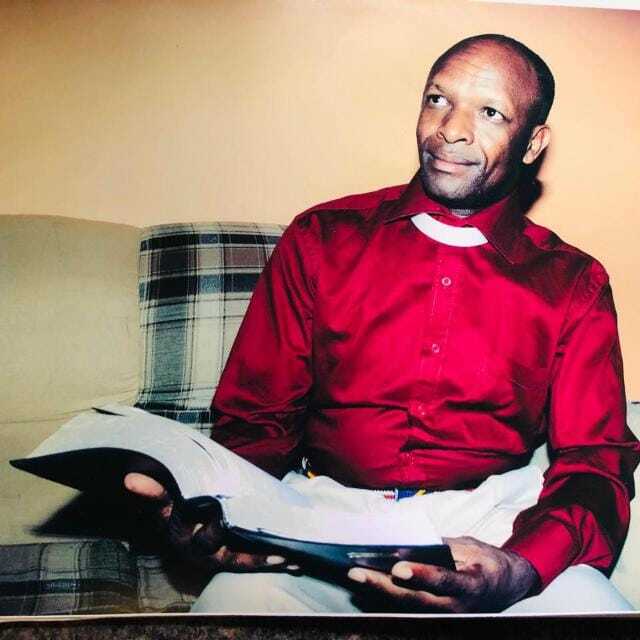
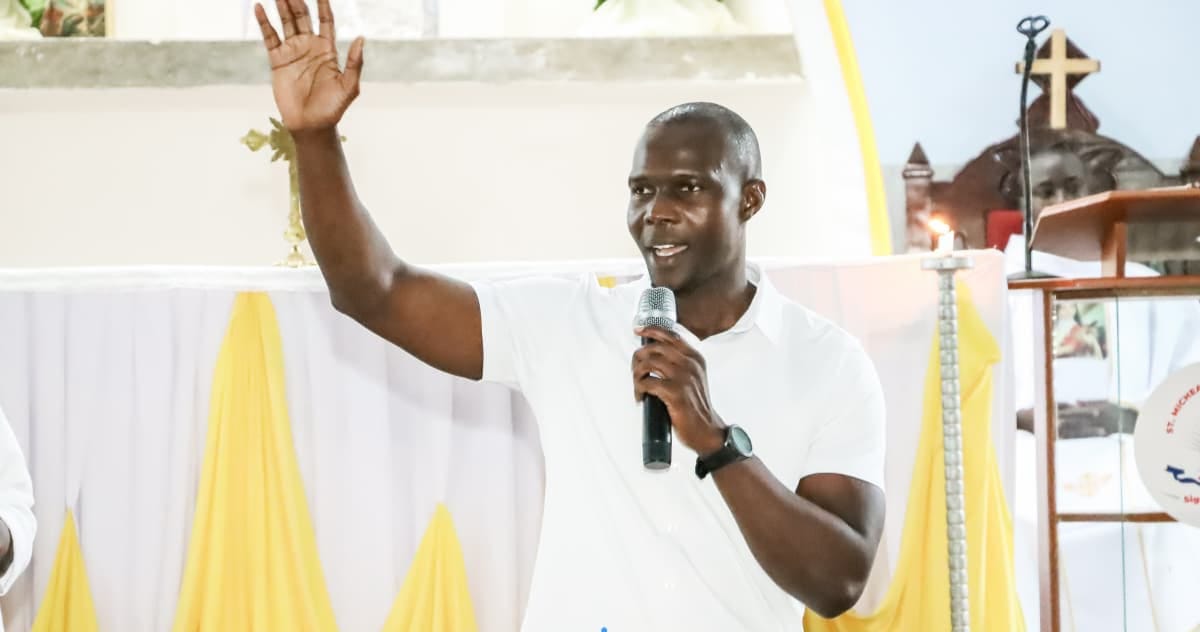
For years, Alfred Getonga was one of the most important yet least publicly visible men in Mwai Kibaki’s political life,the trusted aide who stood close to the future president through the difficult opposition years.
He helped organise his Democratic Party campaigns and later occupied a coveted position at the centre of State House power.
Then, almost as quickly as he had risen, Getonga disappeared from official public life.
His story is intertwined with some of the most consequential chapters of Kibaki’s political career: the struggle for multiparty democracy, the Democratic Party’s presidential campaigns of 1992 and 1997, Kibaki’s years as Leader of the Official Opposition, the 2002 NARC victory and the first Kibaki presidency.
It is also tied to one of the darkest episodes of that administration, the Anglo Leasing corruption scandal.
Getonga is the son of the late Simeon Getonga, a pioneer Nairobi Town Clerk and this places him in one of the country’s prominent professional families.
He attended St. Mary’s School in Nairobi and later Amherst College in Massachusetts, United States, where he was a contemporary and schoolmate of former President Uhuru Kenyatta among children of prominent,influential individuals and families.
Some of the sources who talked to Daily News Kenya-International, describe Getonga as part of the group of young Kenyans from prominent families who became involved in the campaign for political pluralism in the late 1980’s and early 1990’s.
His political apprenticeship was more consequential.
Getonga became associated with Kibaki’s Democratic Party from the early days of Kenya’s return to multiparty politics.
According to his peers,he became DP activist from 1991 and played an important role in strategic planning for Kibaki’s presidential campaigns in 1992 and 1997.
He was not simply an aide who appeared after Kibaki became president, he had already become part of the politician’s inner political machinery during the years when Kibaki was trying, unsuccessfully, to break the KANU establishment’s hold on the presidency.
When Kibaki became chairman of the Democratic Party and later Leader of the Official Opposition following the 1997 election, Getonga’s importance increased.
Many recall that when people wanted to reach Kibaki during those years, Getonga was often the man they had to go through.
He effectively became the gateway to the Othaya MP and opposition leader.
Kibaki its said that he was not easily reached by telephone and Getonga was the person who controlled access.
That role placed Getonga at the heart of Kibaki’s political operation during a period when the DP leader was repeatedly being written off as an unsuccessful presidential contender.
Kibaki lost the 1992 presidential election and finished second to Daniel arap Moi in 1997.
He nevertheless remained one of the most formidable opposition figures in Parliament.
In those years, Getonga helped manage the political machinery around him, including campaign strategy and access to the increasingly influential opposition leader.
Getonga was more than a presidential aide in the conventional administrative sense.
He was a political operative who knew Kibaki’s habits, controlled access to him and had spent years helping manage his political campaigns.
One revealing account comes from journalist and former EastAfrican business editor Charles Obbo,a Ugandan national who recalled being invited by Getonga to meet Kibaki during the 2002 campaign period.
According to Obbo as he told DNK-International, Getonga arranged the encounter at Parliament Buildings, where the journalist expected a conventional political interview.
Instead, the discussion wandered through political economy, rural economics and literature.
Kibaki spoke about fighting corruption, reviving the rural economy, helping milk and coffee farmers, restarting failed state corporations and improving infrastructure.
The episode provides a glimpse into the way Getonga operated: quietly arranging access to a politician whose public image was that of a reserved, cerebral economist.
It also produced one of the most memorable observations about Getonga’s political role.
Obbo recalled that after he failed to write a story from the meeting, Getonga called him in the middle of the night and angrily complained that he had ignored Kibaki while international newspapers were eager to write about him.
That incident captures something central to Getonga’s reputation: he was intensely protective of Kibaki’s political image and deeply invested in getting his principal heard.
When Kibaki finally won the 2002 presidential election under NARC, Getonga moved with him into State House.
He became the President’s personal assistant and emerged as one of the influential figures around the new administration.
Observers regarded him as a member of Kibaki’s inner circle.
A 2003 Africa Confidential report described the President’s personal assistant Alfred Getonga as one of the people with considerable influence around State House.
His influence was not limited to arranging the President’s diary or handling correspondence.
Later accounts described him as one of the young political operators around the presidency who had roots in the old Democratic Party network.
But the same access that made Getonga powerful would ultimately become the source of his downfall.
By 2004, the Anglo Leasing scandal had begun to threaten Kibaki’s government.
John Githongo, then the government’s anti-corruption czar, was investigating suspicious security related contracts involving companies that were alleged to have extracted huge sums from the Kenyan government.
Getonga’s name began appearing in the investigations.
The Parliamentary Public Accounts Committee (PAC) examined allegations concerning him, while Githongo’s evidence placed the presidential aide among senior figures allegedly connected to the controversial procurement network.
A later parliamentary record shows Getonga’s name appearing in connection with the Anglo Leasing investigations.
The allegations were serious.
A leaked 2006 US diplomatic cable, based in part on Githongo’s dossier, described Getonga as a central intermediary between businessmen involved in the controversial contracts and senior government officials.
The cable alleged that he used his position as personal assistant to Kibaki to advance questionable contracts and that funds were channelled towards political activities and personal benefit but all those were allegations as Getonga was never charged with a criminal offence arising from Anglo Leasing scam.
The Organized Crime and Corruption Reporting Project noted that he had been named by Githongo and US officials but had not been charged in connection with the scandal.
Getonga and other people implicated in the scandal repeatedly denied wrongdoing according to multiple media reports then.
His departure from State House came in February 2006.
The official explanation was that his contract had expired and would not be renewed.
The Presidential Press Service (PPS) announced on February 14, 2006 that he was no longer employed in the Office of the President.
However some media reports linked his exit as part of the fallout from the Anglo Leasing scandal.
However, another chapter of Getonga resurfaced in the political orbit of Uhuru Kenyatta.
The two had been schoolmates at St Mary’s and later college contemporaries in the United States.
Its believed that during the 2013 election period, Getonga played a role in Uhuru Kenyatta and William Ruto’s campaign, including acting as a liaison between their campaign and the outside world.
That connection is significant because it shows that Getonga had not necessarily abandoned politics rather he had moved away from the formal public spotlight.
His later public appearances became extremely rare.
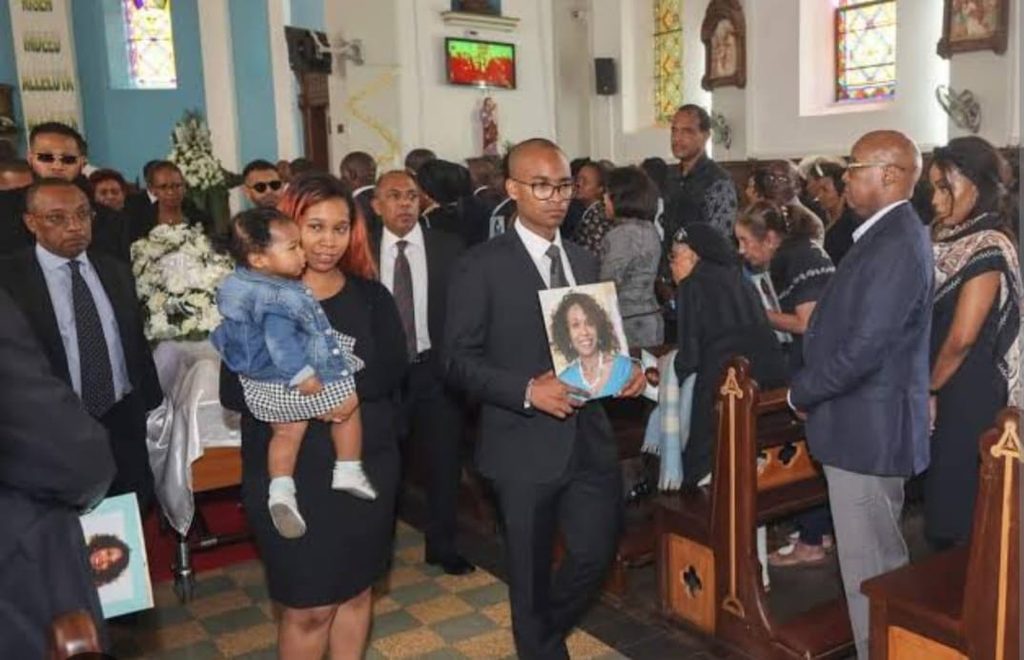
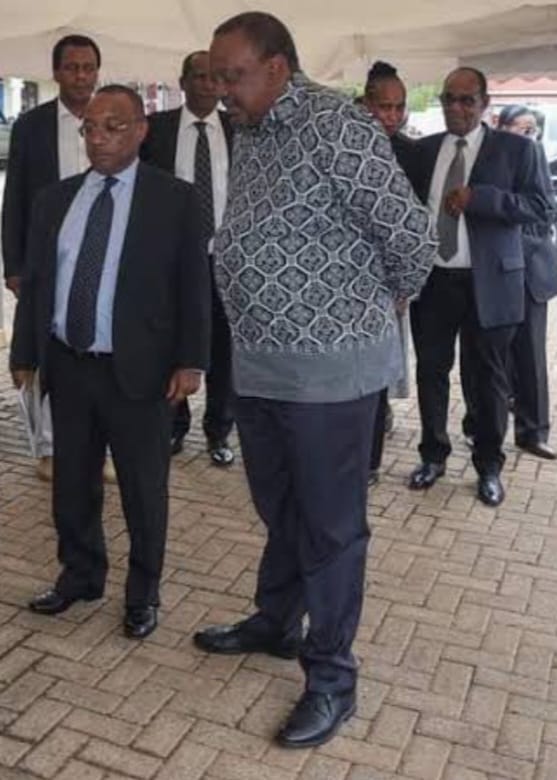
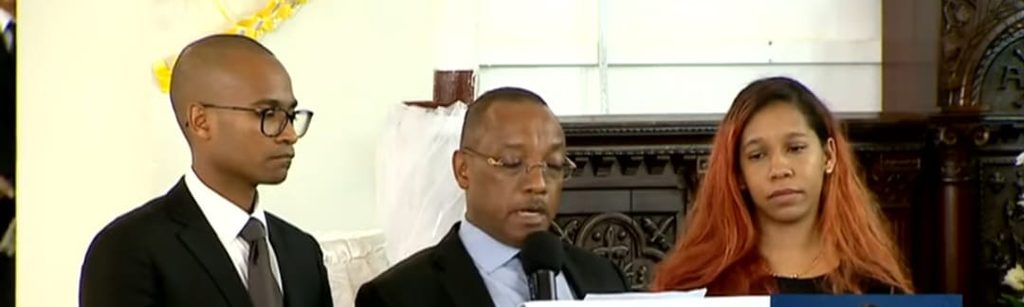
One of the clearest recent glimpses came in 2023, when former President Uhuru Kenyatta attended the requiem mass of Getonga’s wife, Popsy Bastiana D’Souza Getonga, at St Austin’s Catholic Church in Nairobi. R
During the mass, Getonga shared a history dating back to their Amherst College years.
In the years since his State House exit, Getonga has generally concentrated on his busineses with his contemporaries indicating that he went into business after leaving government, but details of his commercial activities have remained largely outside the public domain.
For a man once described as the person to call if one wanted to speak to Kibaki, the silence has been striking.
His memorable public remarks are harder to quote because Getonga was rarely the politician standing at a podium.
His influence came largely through private conversations, campaign organisation and control of access.
The most memorable is the account of his late night complaint to journalist Obbo after Kibaki failed to receive publicity from a meeting Getonga had arranged.
It illustrates his determination to promote Kibaki and his sensitivity to how the opposition leader was portrayed in the media.
Another notable remark came much later, when Getonga responded to allegations concerning Keriako Tobiko during the 2011 vetting of Tobiko for Director of Public Prosecutions.
Getonga then dismissed the allegations against him as “dubious, bogus and nasty.”
His career therefore presents two very different images.
The first is that of the discreet political professional: a young activist from the early multiparty era, a strategist in Kibaki’s DP campaigns, gatekeeper to the opposition leader, trusted personal assistant and one of the influential figures surrounding the President during the first of Kibaki administration.
The second is the controversial figure caught in the political storm surrounding Anglo Leasing, a man whose access to the presidency became the subject of serious allegations from anti-corruption investigators and whose government contract was ultimately not renewed.
In May 2006, the United States barred Getonga from entering the country under an anti-corruption provision alongside businessmen Jimmy Wanjigi, Deepak Kamani and Anura Perera.
For much of Kibaki’s opposition career, Getonga was the man behind the door,the person who controlled access to a politician who rarely picked up the phone himself.
Want to be featured? or have a personality want to know about him or her:
📞WhatsApp: ±2540703633820,±254754168624
✉️ Email: dailynewskenya0@gmail.com
SUPPORT CITIZEN JOURNALISM
Help us keep independent, community-focused journalism alive.
Paybill: 222111
Account No. 3179512
Your support helps us report, inform and amplify stories from communities that matter.
Thank you for supporting citizen journalism.
🗓️ [DNK-International@October 5, 2026]