DNK International
 By Xavier Lugaga,Busia.
In the long and often male dominated corridors of Kenyan political history, the story of Margaret Rose Wambui Kenyatta stands out,not for loud defiance, but for steady, deliberate leadership that quietly redefined what women could achieve in public life.
Born in 1928, Margaret was the second child of Jomo Kenyatta, Kenya’s founding president, and Grace Wahu.
She grew up in a family that would become synonymous with Kenya’s struggle for independence and early nationhood.
As the sister to Peter Muigai Kenyatta, her upbringing was steeped in politics, responsibility, and expectation,but Margaret carved her own path.
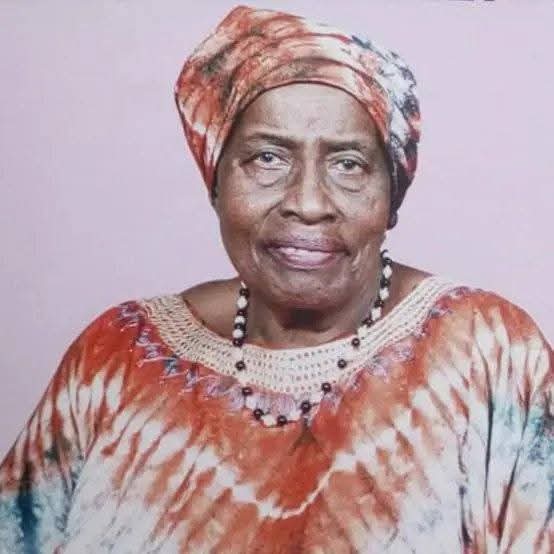
Her early education began at Ruthimitu Primary School,Nairobi before she joined the prestigious Alliance Girls High School in 1947, among its pioneer students.
At a time when educating girls beyond basic levels was still a rarity, her presence at the institution signaled the emergence of a new generation of Kenyan women ready to step into leadership.
Yet it was in the bustling civic life of Nairobi that Margaret would leave her most indelible mark.
After serving four terms as a councillor for Dagoretti Ward, she broke a historic barrier in 1970 when she was elected the first and to date, the only woman Mayor of Nairobi.
In doing so, she joined the ranks of Charles Rubia and Isaac Lugonzo as one of the early African leaders of the capital city, becoming its third African mayor.
Her tenure at City Hall lasted until 1976, when she handed over to Andrew Kimani Ngumba.
Those six years according to records and those who talked to DNK-International were not marked by flamboyance but by firm administration and a calm assertion of authority in a political environment that was often sceptical of female leadership.
Colleagues and observers would later recall her as measured and composed,qualities that earned her respect across political divides.
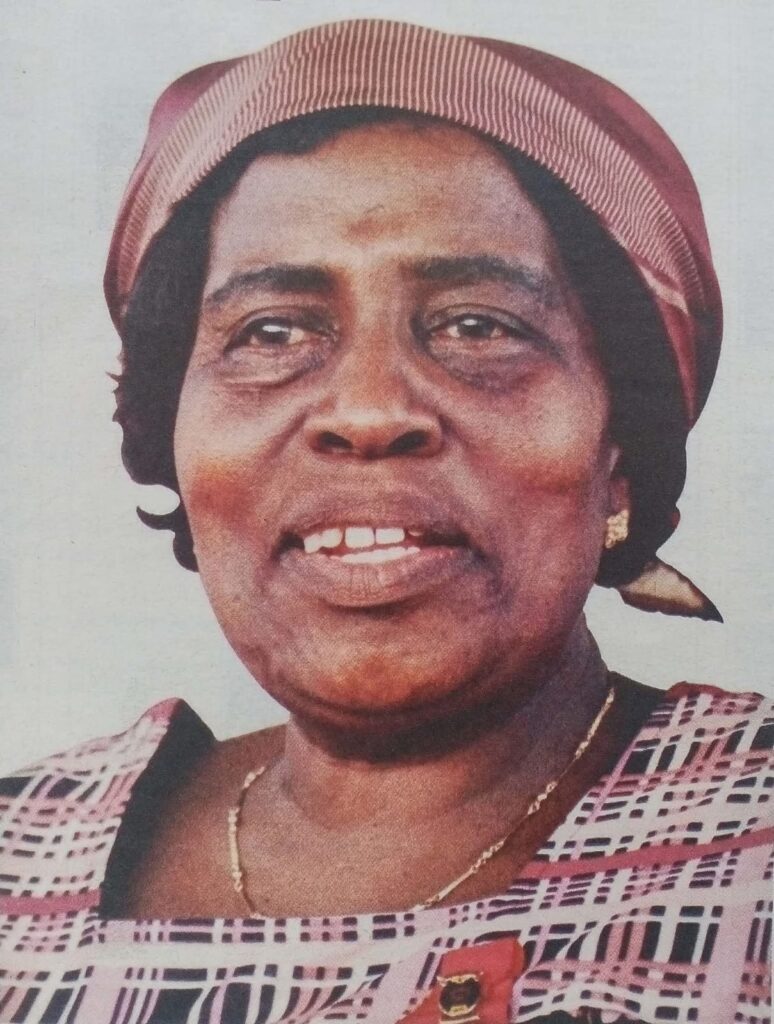
She neither relied on her father’s towering legacy nor distanced herself from it; instead, she navigated it with quiet confidence.
Beyond City Hall, Margaret extended her service to the international stage.
From 1976 to 1986, she served as Kenya’s ambassador to the Nairobi-based United Nations Environment Programme.
In that role, she became the first woman in Kenya to serve as an ambassador,another glass ceiling broken with characteristic understatement.
Her decade long diplomatic service coincided with the formative years of UNEP, positioning Kenya as a key player in global environmental governance.
It was a role that required tact, diplomacy, and an ability to represent a young nation on an increasingly complex world stage.
Despite her achievements, Margaret remained an understated figure in Kenya’s historical narrative often overshadowed by the magnitude of her father’s legacy.
Yet her life tells a different story: one of persistence, firsts, and quiet transformation.
She passed away in 2017, closing a chapter that had spanned colonial Kenya, independence, and the evolution of modern governance.
But her legacy endures in the city she once led, in the diplomatic paths she opened for women, and in the enduring question her career poses: why, decades later, has Nairobi never again elected a woman mayor or Governor?
In an era where conversations around gender and leadership have become more urgent, Margaret Kenyatta’s journey offers both inspiration and challenge.
She did not just occupy office,she expanded its possibilities.
And in doing so, she remains not just a daughter of Kenya’s founding father, but a founding figure in her own right.
Want to be featured? or have a personality want to know about him or her:
📞WhatsApp: ±2540703633820,±254754168624
✉️ Email: dailynewskenya0@gmail.com
🗓️ [DNK-International@May 6,2026]