DNK International
 By Our Reporter,Nakuru
For more than three decades, Onesmus Kimani Ngunjiri has remained one of the most recognisable and outspoken political figures in Nakuru and the wider Rift Valley.
From his early days as a loyalist of former President Daniel arap Moi and a KANU grassroots organiser to his two terms as Bahati Member of Parliament, his alliance with William Ruto and his latest emergence as leader of the Farmers Party, Ngunjiri’s political career mirrors the shifting alliances and competing power centres that have defined Kenyan politics.
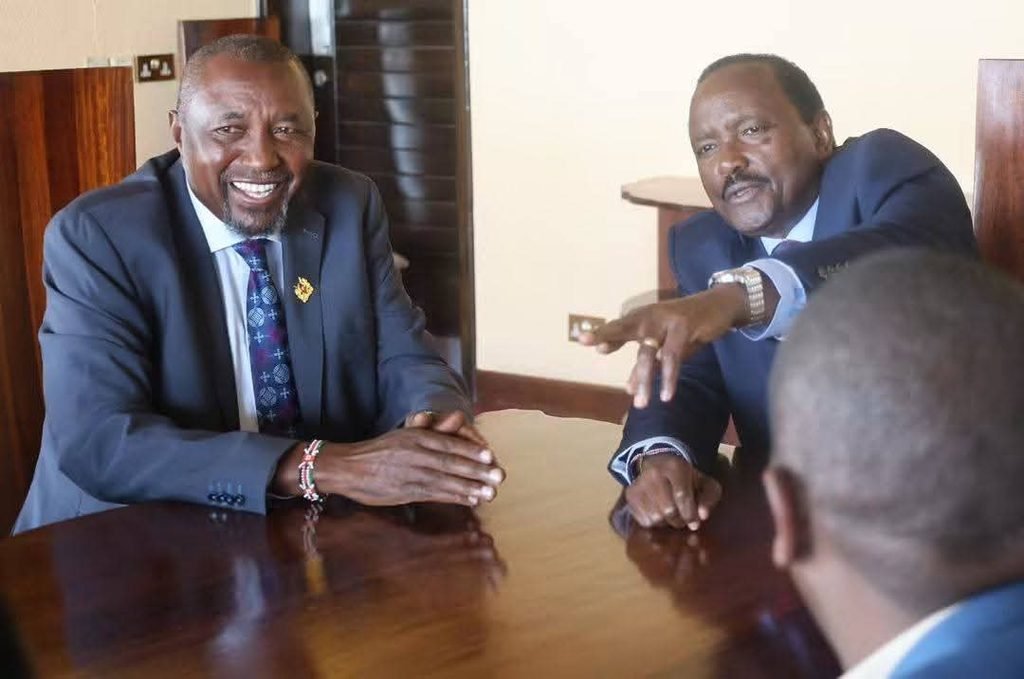
His latest political chapter has now brought him into discussions with Wiper Patriotic Front leader Kalonzo Musyoka.
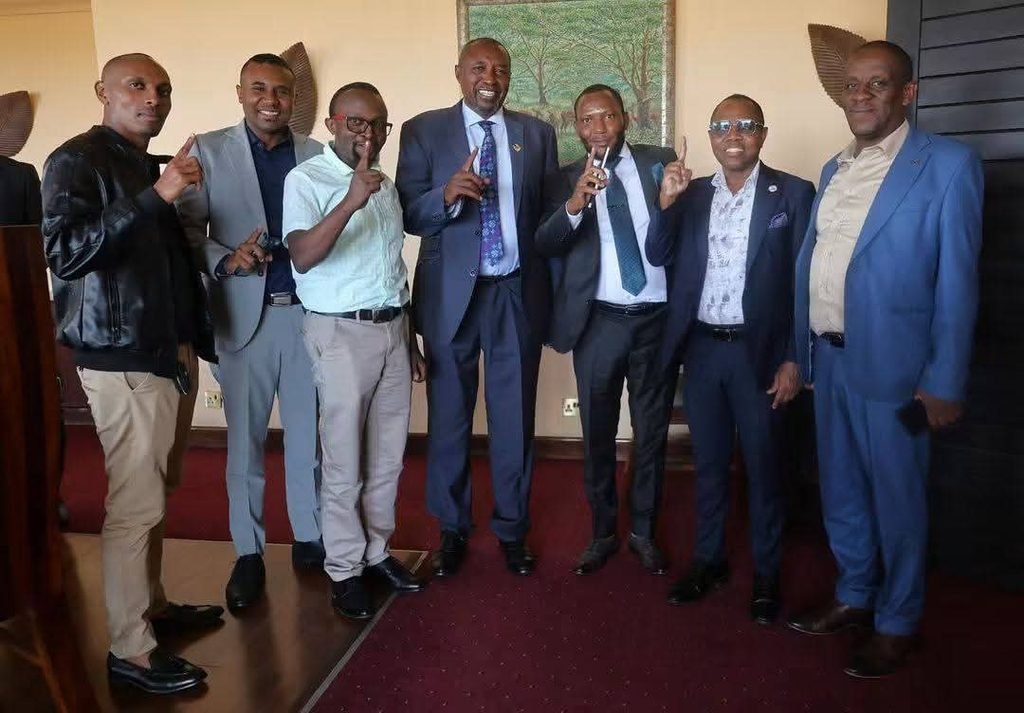
The two held a consultative meeting earlier this month to discuss what Kalonzo’s press team described as Kenya’s political and economic future, inter-party cooperation, grassroots mobilisation, inclusive governance, peacebuilding and national unity.
The meeting was attended by officials from both parties and signalled Ngunjiri’s continuing ambition to remain relevant in national politics ahead of the 2027 General election.
Born in 1953 at Banita Sisal Estate in Nakuru, Ngunjiri is the fifth-born in a family of 10.
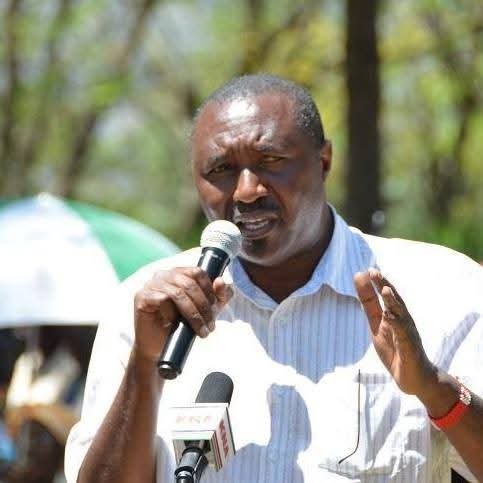
At 73,he belongs to a generation of politicians whose careers began in the highly centralised politics of the KANU era.
He attended Michinda Primary School and later Michinda Secondary School, where he completed his East African Certificate of Education in 1971.
Unlike many politicians who entered public life after professional careers, Ngunjiri built his early working life largely in business.
In a past interview with DNK-International,Ngunjiri said that after completion of school he was never employed,instead, he worked as a manager on his father’s farm and engaged in a variety of businesses, including charcoal trading, the matatu business, scrap metal dealing, tours and travel, farming,tractor and lorry businesses.
He also became associated with community initiatives through the Hands of Mercy Ngunjiri Foundation, where he’s the board chairman.
His entry into politics was deeply connected to the political machinery of the late President Daniel arap Moi.
Ngunjiri has recounted how an encounter with Moi over a land dispute changed the course of his life.
According to accounts of his political journey, he sought Moi’s intervention after running into trouble over a piece of land and was impressed by the former president’s willingness to listen to his complaint.
The encounter strengthened his loyalty to Moi and KANU, eventually propelling him into active party politics.
Ngunjiri became involved in KANU’s grassroots organisation in Nakuru, at different times serving as chairman at the Subukia sub branch and Nakuru branch when then was a district.
His association with Moi was more than a party relationship.
Ngunjiri became known as one of the president’s loyalists at a time when Nakuru was a major political base for Moi.
He has severally spoken warmly of the former president, describing him as a leader who listened to ordinary people and portraying his relationship with Moi as an important influence on his own political career.
But loyalty to KANU did not immediately translate into electoral success.
Ngunjiri unsuccessfully sought elective office in the late 1990’s and again in subsequent elections, including the 2002 and 2007 parliamentary contests.
His breakthrough eventually came in 2013, when he won the newly established Bahati parliamentary seat on The National Alliance (TNA) ticket with 49,450 votes.
The victory marked a dramatic transformation from a veteran party operative into an elected national politician.
He was subsequently associated with the Jubilee Alliance and won re-election as Bahati MP on a Jubilee Party ticket in 2017, receiving 60,650 votes.
In the National Assembly, he served on committees dealing with national cohesion, lands and implementation.
His political style, however, has often been as notable as his electoral record.
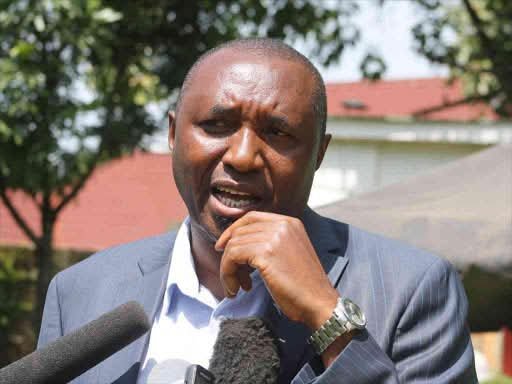
Ngunjiri developed a reputation as a blunt, combative and highly vocal politician, particularly on matters affecting Nakuru and the politics of the Rift Valley.
Some people in Nakuru described him as an “abrasive legislator” and noted that he was arguably among the county’s most vocal politicians away from the floor of Parliament.
His prominence increased during the period when President William Ruto’s political influence then as deputy to former President Uhuru Kenyatta was expanding in the Rift Valley and Mount Kenya.
Ngunjiri became a prominent supporter of Ruto and was associated with the Jubilee Party’s “Tanga Tanga” faction.
His politics increasingly placed him on the side of Ruto and against elements of the Jubilee establishment associated with President Uhuru Kenyatta.
The period also produced some of his most memorable political confrontations.
His disagreements with then Nakuru Senator Susan Kihika now Governor became particularly public, with the two leaders exchanging sharp accusations over the 2022 gubernatorial contest and their competing loyalties within the Ruto camp.
At one point Ngunjiri famously told Kihika, “I am only married by one wife. You are not married by me,” as he demanded that she stop attacking him publicly.
His political fortunes changed again in 2022.
Having defected from Jubilee to the United Democratic Alliance (UDA), Ngunjiri sought a third consecutive term as Bahati MP.
He lost to Jubilee candidate Irene Njoki, who secured 34,308 votes against his 26,809.
The defeat ended his decade long tenure in Parliament, which had begun with his 2013 election.
The loss did not end his political career.
Under the Kenya Kwanza administration, Ngunjiri was appointed a Chief Administrative Secretary in the Ministry of Lands.
His tenure however was cut short after the courts declared the appointment of CASs unconstitutional, sending him and other appointees out of government.
His post parliamentary career was also marked by controversy.
In April 2023, Ngunjiri was caught up in a dramatic land related confrontation in Nakuru in which gunfire was reported and police disarmed him as investigations were launched.
Reports then indicated that a person was killed during the incident.
Ngunjiri maintained that the matter was under investigation and did not provide a detailed public account at the time.
The episode became one of the most serious controversies associated with his political career.
He had faced controversy before.
In 2017, a Bahati parliamentary aspirant accused him of assault following a disagreement during a live radio programme.
Ngunjiri denied physically fighting his opponent and described the allegations as politically motivated.
Land has also followed Ngunjiri throughout his public life.
Parliamentary debates in 2001 featured questions over the allocation of a 15 acre parcel in the Uplands area to the then KANU chairman of Nakuru.
The matter was fiercely criticised by some MPs, who questioned why a politically connected individual could receive land while local squatters remained without land.
His outspoken nature has also repeatedly put him at odds with political colleagues.
In 2020, Nakuru leaders called for disciplinary action against several politicians and accused Ngunjiri of divisive and ethnically charged politics.
In 2021, he became embroiled in another public dispute with Kihika over the Building Bridges Initiative and the political succession debate.
Yet Ngunjiri’s political record cannot be reduced to controversy.
His two terms in Parliament gave him a substantial platform to raise constituency and national issues, particularly relating to land, development, national cohesion and the interests of ordinary residents of Bahati and Nakuru.
His long involvement in community initiatives through the Hands of Mercy Ngunjiri Foundation also forms part of his public service profile.
Ngunjiri’s influence in Nakuru has largely rested on three factors: longevity, grassroots networks and an ability to remain politically relevant through changing alliances.
He survived the collapse of KANU’s dominance, the rise of NARC and TNA, the Jubilee era, the Tanga Tanga–Kieleweke battles, the emergence of UDA and the post-2022 political realignment.
Few Nakuru politicians of his generation have moved through so many political formations while maintaining a recognisable public profile.
His relationship with the Rift Valley has also been unusual.
Although ethnically associated with the Kikuyu political constituency of Nakuru, Ngunjiri built his career inside a region where political competition has frequently been organised around broader alliances between communities.
His long association with Moi, followed by his alliance with Ruto, demonstrated his willingness to work within Rift Valley centred political coalitions rather than confine his politics to his own community.
That history may explain why his latest political move is attracting attention.
After leaving UDA in 2024, Ngunjiri openly complained that loyal party members had been sidelined and argued that the party had become controlled by individuals.
He declared, “I am not in UDA. I will never wear yellow anymore,” while accusing the party of failing to reward people who had worked for it.
He also criticised what he described as political interference, questionable nominations and the marginalisation of his supporters in Nakuru.
In another striking statement, he complained that he had been “almost dying fighting for UDA” while others were being given positions.
His comments reflected the frustration of a politician who had invested heavily in the Ruto political project but believed he had not received a corresponding political return.
For a period, his political comeback was linked to acquisition of a dormant party.
By 2025, reports described him as seeking to revive the party as a political vehicle in the Mount Kenya region.
By September 2026, however, Ngunjiri had emerged in a different role: leader of the Farmers Party.
Recent reports showing him holding talks with Musyoka as Kenya’s political class begins positioning itself for the 2027 elections is significant because it places a veteran politician who began his career under Moi’s KANU in conversation with one of Kenya’s longest-serving opposition figures.
Their discussions on inter-party cooperation, inclusive governance, peacebuilding and national unity suggest that Ngunjiri is once again seeking a place at the national negotiating table rather than merely fighting for influence in Nakuru.
His political journey is therefore one of remarkable reinvention. He began as a businessman and grassroots KANU organiser, became one of Moi’s loyalists in Nakuru, endured repeated electoral defeats, won Bahati twice, served under TNA and Jubilee, became a powerful Ruto supporter, moved to UDA, lost his parliamentary seat, served briefly as a Lands CAS and later turned to building another political vehicle.
Whether his latest chapter will make him a major national player or another of Kenya’s many political party leaders remains to be seen.
But his staying power is difficult to dismiss.
At a time when parties are negotiating alliances ahead of the 2027 election, Ngunjiri’s greatest political asset may be precisely what has sustained him for decades: his knowledge of grassroots politics, his long memory of Kenya’s shifting political alliances and his willingness to speak loudly when others choose caution.
Want to be featured? or have a personality want to know about him or her:
📞WhatsApp: ±2540703633820,±254754168624
✉️ Email: dailynewskenya0@gmail.com
SUPPORT CITIZEN JOURNALISM
Help us keep independent, community-focused journalism alive.
Paybill: 222111
Account No. 3179512
Your support helps us report, inform and amplify stories from communities that matter.
Thank you for supporting citizen journalism.
🗓️ [DNK-International@September 7 2026]