DNK International
 By Our Correspondent,Lusaka,Zambia
Zambian President Hakainde Hichilema has secured another five year mandate, defeating his closest challenger, Brian Mundubile, in an election that turned into a referendum on his economic record and the direction of the southern African nation.
Hichilema, 64, was declared the winner after polling in the August 13 presidential election.
The Electoral Commission of Zambia results reported by major international media put him at about 61.4 per cent of the vote, while Mundubile received about 1.86 million votes, giving the incumbent a clear first round victory.
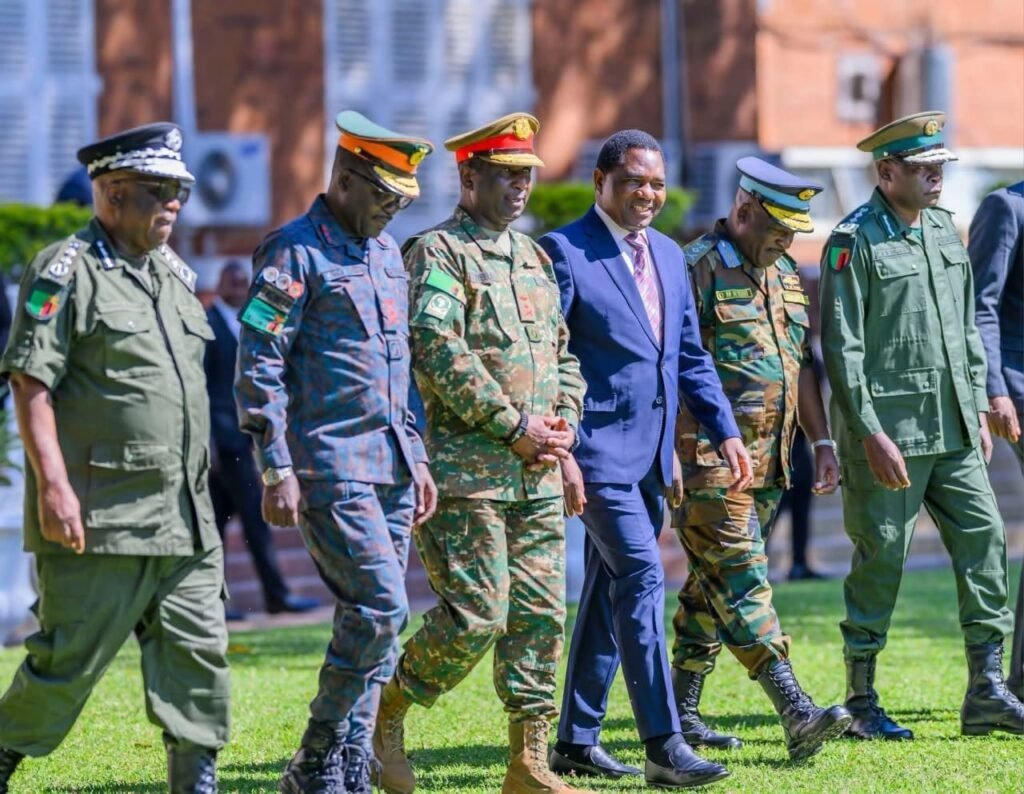
His victory came after Hichilema and his wife, First Lady Mutinta Hichilema, voted at Kabulonga Boys Secondary School in Lusaka, where the President urged Zambians to participate peacefully in the democratic process.
For Hichilema, the victory represents the culmination of an extraordinary political journey.
Before becoming president, he contested the presidency repeatedly, in 2006, 2008, 2011, 2015 and 2016 before finally defeating then President Edgar Lungu in 2021 (now decaesed).
Born on June 4, 1962, in Hachipona in present day Monze District, Hichilema rose from a rural background to become one of Zambia’s most successful businessmen.
He studied Economics and Business Administration at the University of Zambia.
He graduated in 1986, before obtaining an MBA in Finance and Business Strategy from the University of Birmingham in the United Kingdom (UK).
His professional career was equally impressive.
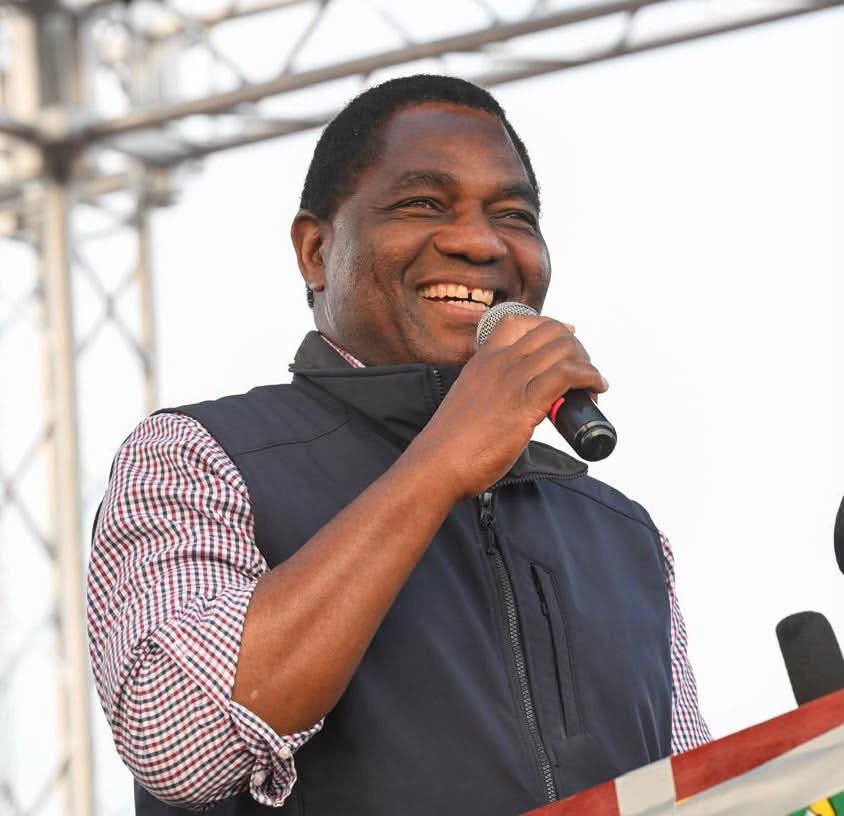
Hichilema became chief executive officer of Coopers Lybrand Zambia in 1994 and later Grant Thornton Zambia in 1998.
He also served on the boards of several major companies and chaired institutions including Barclays Bank Zambia, Sun International and Africa Trade Insurance.
The Zambian President built a reputation as an entrepreneur, farmer and businessman, including major interests in cattle ranching and other sectors.
Politics, however, transformed him from a successful businessman into a national opposition figure.

After the death of United Party for National Development founder Anderson Mazoka, Hichilema took over leadership of the UPND in 2006 and became the party’s presidential candidate.
His political career was marked by persistence and confrontation with successive governments.
One of the darkest moments came in 2017, when he was arrested and charged with treason following a political confrontation with the Edgar Lungu administration.
He spent several months in detention before the charge was dropped.
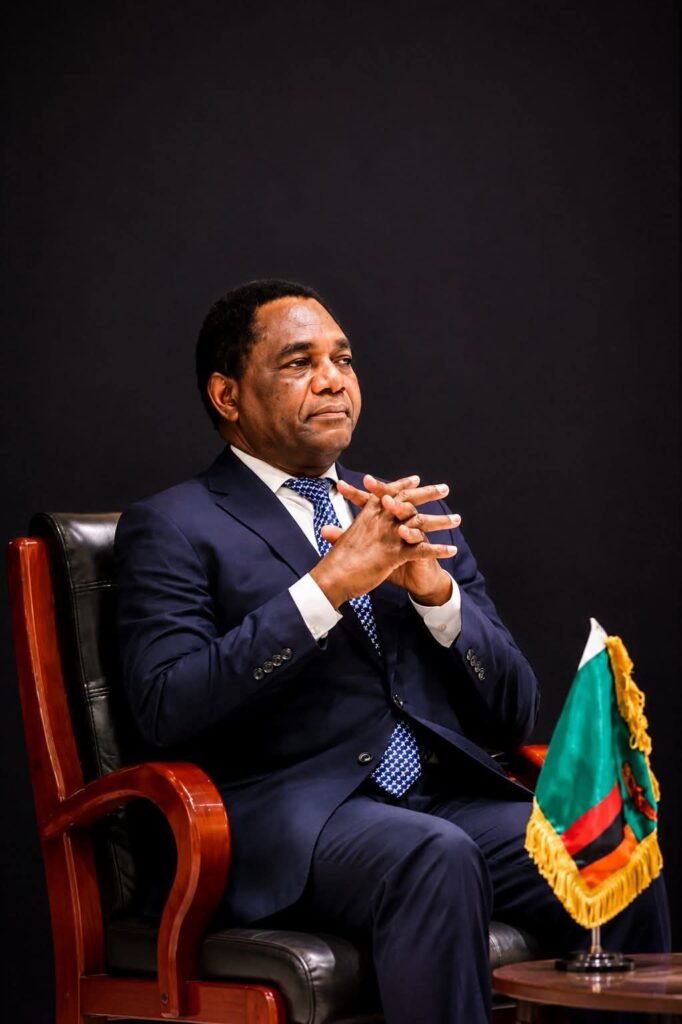
His eventual breakthrough came in 2021 when he defeated Lungu by a wide margin, winning about 59 per cent of valid votes.
The victory brought an opposition leader who had spent years challenging the political establishment into State House.
Hichilema inherited an economy struggling under heavy debt, inflation, currency pressures and the effects of Zambia’s sovereign debt crisis.
His administration made debt restructuring one of its central priorities and worked with international financial institutions to restore Zambia’s financial credibility.
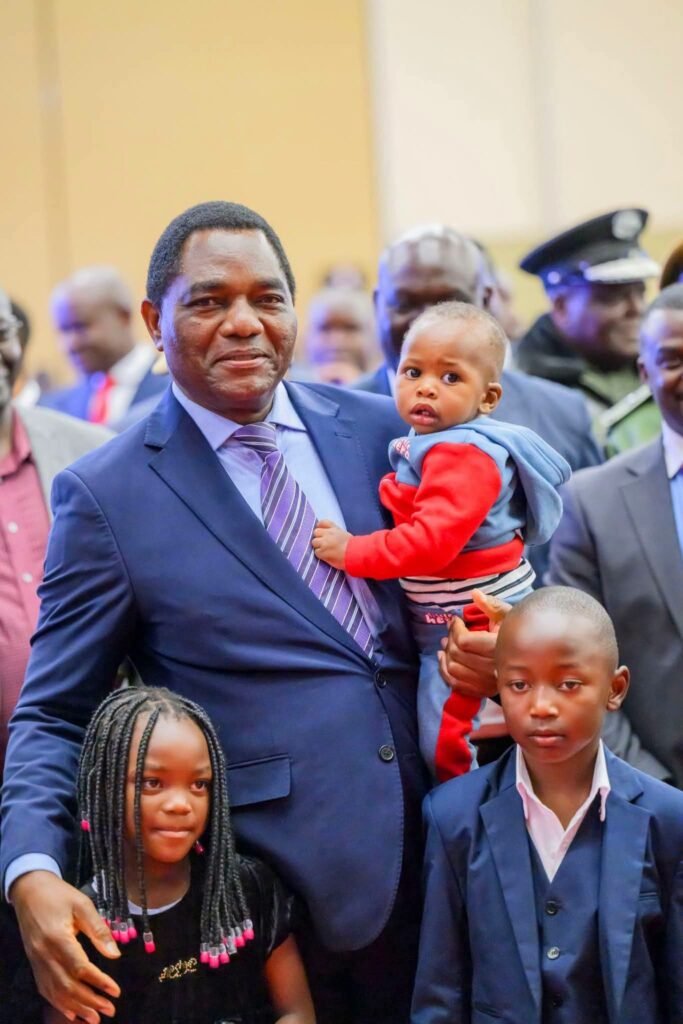
Hichilema’s government has also pointed to the introduction of free education, the return of more than two million children to school, the recruitment of tens of thousands of teachers, expansion of school feeding programmes, increased mining investment and infrastructure development as some of its major achievements.
The government has further highlighted the restructuring of a large proportion of Zambia’s external debt, increased foreign-exchange reserves and efforts to attract investment into the mining sector.
Zambia’s copper industry has become particularly important as the country seeks to take advantage of rising global demand for critical minerals.
But Hichilema’s first term was not without criticism as established by DNK-International
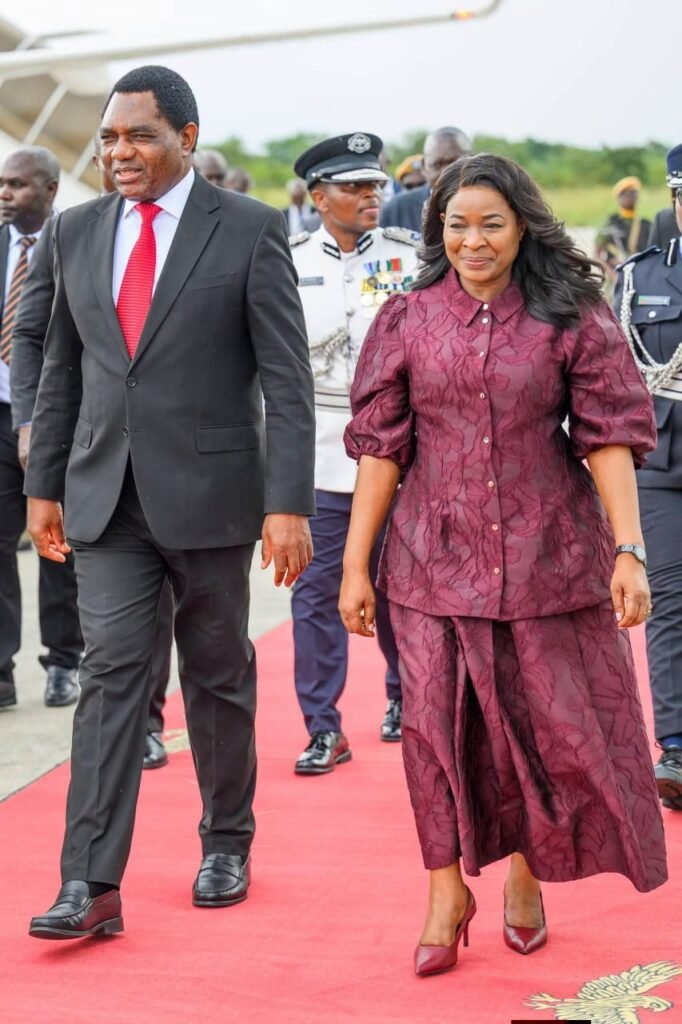
Although macroeconomic indicators improved, many ordinary Zambians continued to complain about the high cost of living, unemployment and poverty.
These concerns became central to Mundubile’s campaign, with the opposition arguing that economic recovery had not yet translated sufficiently into better household incomes.
That explains the significance of Hichilema’s second term victory.
His supporters who talked to our crew in the capital Lusaka,see Hichilema’s result as an endorsement of his economic reforms and a rejection of returning Zambia to the instability associated with its debt crisis.
Critics, meanwhile, expect him to translate macroeconomic gains into jobs, lower prices and tangible improvements in living standards.
The election itself was not completely free of controversy.
Vote counting was temporarily suspended after violence against election officials and reports of stolen ballot papers.
Mundubile also raised allegations concerning the handling of results, claims rejected by Hichilema’s camp.
International observers acknowledged the largely peaceful character of the vote but raised concerns about aspects of the electoral environment and political freedoms.
Hichilema’s political language has produced several memorable phrases.
His supporters have popularised the nickname “Bally”, which has become closely associated with his political identity.
He has repeatedly insisted that public office is about service rather than personal gain, declaring: “Public office is about service. National interest comes first; personal interest follows later.”
Another defining theme of his presidency has been the slogan “One Zambia, One Nation”, which he has used in appeals for national unity and political stability.
He has also repeatedly called on politicians to reject violence, hate speech and divisive politics.
During his 2026 campaign, Hichilema acknowledged that more needed to be done.
His manifesto promised an ambitious next phase focused on doubling the size of the Zambian economy, creating millions of jobs, permanently ending load-shedding, reducing the cost of living and expanding opportunities for ordinary citizens.
Following his re-election, those promises will now form the biggest test of his second presidency.
As he promised,he wants to turn the gains from debt restructuring into broader economic expansion, with job creation and increased household opportunities at the centre of his second term agenda.
For many Zambians, the message from the election is therefore mixed but clear: they have given Hichilema another five years, but they expect the economic recovery to reach the ordinary household.
For Africa, his re-election carries wider significance.
Zambia is one of the continent’s important copper producers and a growing player in the global critical minerals race.
A stable and economically recovering Zambia could attract further investment while giving African governments another example of how debt restructuring, mining investment, education and economic reform can be combined.
At the same time, Hichilema’s second term will be watched closely on democratic governance, opposition freedoms and the cost of living crisis.
His greatest challenge may no longer be convincing Zambians that he can rescue the economy, but convincing them that the recovery is improving their everyday lives.
From a businessman who entered politics more than two decades ago, to a repeatedly defeated presidential candidate, a detained opposition leader, and finally Zambia’s seventh president, Hakainde Hichilema has travelled one of the most remarkable political journeys in contemporary African politics.
Now, with another five years secured, the question is no longer whether “Bally” can reach State House.
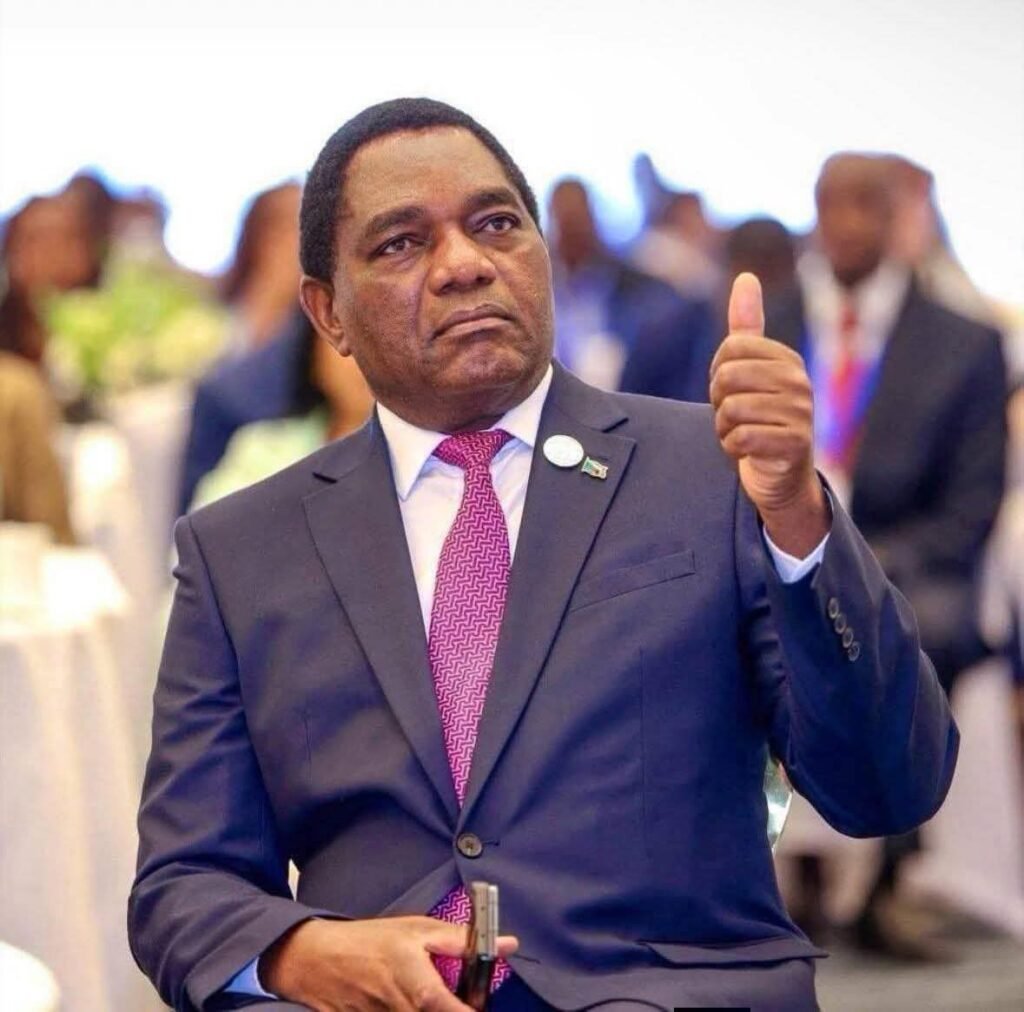
He has already done that.
The question is whether his second term will finally deliver the jobs, cheaper living costs, stronger economy and wider prosperity that millions of Zambians are demanding.
Want to be featured? or have a personality want to know about him or her:
📞WhatsApp: ±2540703633820,±254754168624
✉️ Email: dailynewskenya0@gmail.com
🗓️ [DNK-International@August 18,2026]