DNK International
 By Our Reporter,Nairobi
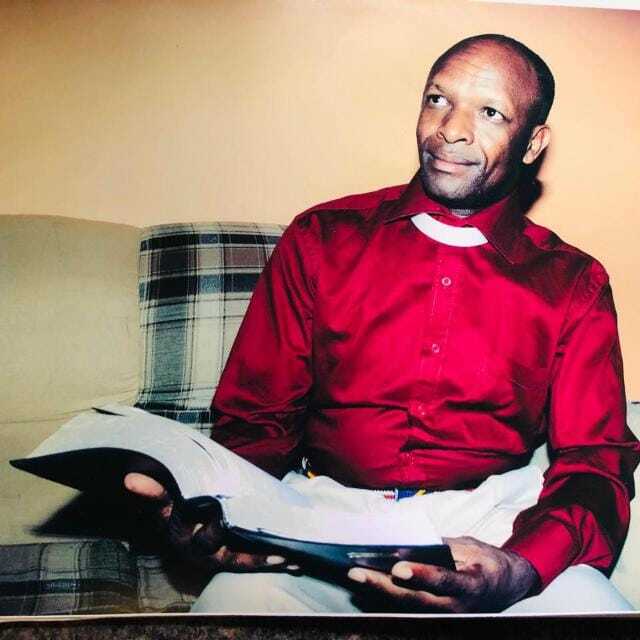
At 16, Narendra Raval arrived in Kenya with little more than his religious training and a modest allowance from his work at a Hindu temple in Kisumu.
More than four decades later, he sits at the helm of one of East and Central Africa’s most prominent manufacturing conglomerate.

Known across Kenya as “Guru”, Raval’s journey from temple service to industrial heavyweight is one of the more remarkable stories in the country’s business landscape.
Today, he stands tall as one of the few businessmen in Kenya that have the ear of President William Ruto whom he once stated, publicly, that he wishes that he would continue as President for at least 25 years.
Born in 1962 in Gujarat, India, Raval grew up in a Brahmin family, a community traditionally associated with religious service.
He began serving as a priest at the age of 11 at the Lord Narnarayandev Temple in Bhuj before travelling to Kenya in 1978 to work as an assistant priest at a Swaminarayan temple in Kisumu.
The title “Guru”, which has followed him throughout his business career, is rooted in those early religious years rather than his later success in business.
His life changed after he married Neeta Raval.
According to accounts attributed to Raval, marriage meant he could no longer continue serving in the temple, forcing him to look for another means of livelihood.
In 1982, he took a job at a Nairobi hardware shop and steel mill.
It was here that he learnt the art of business that would eventually make him wealthy: steel.
Rather than treating the job simply as employment, Raval used it as an apprenticeship.

He learnt about steel products, customers, margins and the mechanics of the construction materials trade.
When the business he worked for eventually closed, he and his wife turned their attention to entrepreneurship.
Their first venture was a modest building materials trading business in Nairobi’s Gikomba market.
The couple started small, operating from an area that was then regarded as an unlikely location for a major industrial enterprise.
Raval once told Daily News Kenya-International that he chose Gikomba because it offered some of the cheapest commercial space available.
The small shop became the foundation of what would later be known as the Devki Group.
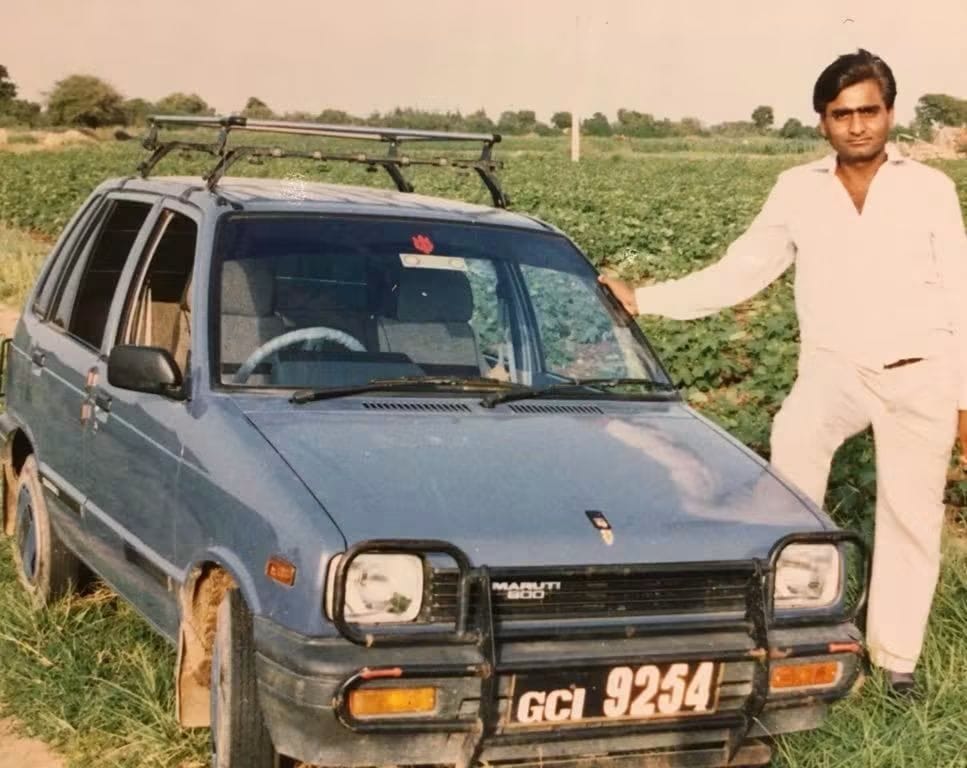
By the early 1990’s, Raval was moving beyond trading into manufacturing.
He established a small steel rolling mill in Athi River, beginning a strategy that would define his business career: making locally what Kenya was importing.
From that modest beginning, Devki expanded into steel, roofing materials, cement, packaging and other businesses.
Today, the privately held conglomerate includes companies such as Devki Steel Mills, National Cement, which produces Simba Cement brand, Maisha Mabati iron sheets and Maisha Packaging, alongside aviation interests.
The group has also expanded beyond Kenya into the wider East African market.
One of the most significant steps in Raval’s expansion came in 2019, when National Cement, a Devki subsidiary, acquired the Kenyan assets of Athi River Mining for about Sh5 billion.
The transaction substantially strengthened Devki’s position in Kenya’s cement industry.
Raval has continued to invest heavily in manufacturing.
In 2022, President William Ruto officially opened Devki’s integrated steel plant in Kwale, a project the government described as a major milestone in Kenya’s push to develop an indigenous iron and steel industry.
The plant was presented as a means of reducing dependence on imported steel and retaining more value within the Kenyan economy.
Devki has subsequently pursued further investments in steel, clinker and cement, while also expanding its regional footprint.
In 2024, National Cement completed the acquisition of Rwanda’s CIMERWA, adding another major cement operation to Raval’s growing regional industrial portfolio.
The scale of the enterprise has transformed Raval from a Gikomba trader into one of Kenya’s most prominent industrialists.
Earlier estimates placed his personal fortune at about $400 million. Forbes included him among Africa’s 50 richest people in 2015.

More recent estimates have placed his wealth substantially higher, although private company valuations make precise figures difficult to independently establish.
Despite his wealth, Raval has cultivated an image that contrasts sharply with the stereotypical lifestyle associated with billionaires.
He has spoken publicly about owning only a small number of personal possessions and has become known for using boda bodas when Nairobi traffic becomes difficult, even as his business interests include helicopters and aviation services.
The story has also acquired a philanthropic dimension.
Raval has pledged to give a significant portion of his wealth to charitable causes and has supported health and education initiatives.
During the Covid-19 pandemic, he donated oxygen worth about Sh100 million to public hospitals, alongside personal protective equipment.
He later published an autobiography, Guru: A Long Walk to Success, with proceeds pledged towards charity.

His public profile expanded beyond business when President Uhuru Kenyatta appointed him Chancellor of Egerton University in 2019.
The appointment placed the industrialist in a ceremonial leadership position at one of Kenya’s oldest public universities.
But Raval’s rise has not been without controversy.
His growing influence in the cement and steel sectors has brought him into repeated policy debates with competitors and regulators.
One of the most prominent disputes concerned the proposed increase in import duty on clinker, a major raw material used in cement production.

Raval and National Cement supported higher protection for locally produced clinker, while rival cement manufacturers opposed the proposal, arguing that it could disadvantage other producers.
The debate illustrated the wider tension surrounding Raval’s industrial philosophy: he argues for local manufacturing and import substitution, while competitors and critics have questioned the effect of policies that could strengthen Devki’s position in particular segments of the supply chain.
Raval has also developed close relationships with Kenya’s political leadership.

His factories and investments have been visited or commissioned by successive presidents, including Uhuru Kenyatta and William Ruto.
Devki’s investments have increasingly intersected with government priorities in manufacturing, infrastructure and affordable housing.
Government programmes have therefore become an important part of the broader economic environment in which the group operates, although claims that Devki is the principal supplier for particular government projects should be tied to specific contracts or procurement records rather than assumed.
The businessman himself has repeatedly presented his philosophy in relatively simple terms: manufacture locally, keep costs down, reinvest profits and build industries around products Kenya would otherwise have to import.
That philosophy has helped turn a small Gikomba hardware operation into a large manufacturing conglomerate.
Yet the story of Narendra Raval is ultimately larger than steel and cement.
It is a story of a young temple priest who arrived in Kenya with limited means, learnt a trade almost by necessity, entered the informal economy with his wife and gradually moved from buying and selling steel to producing it.
The scale of Devki today bears little resemblance to the small shop from which it emerged.
Its factories, cement plants, steel mills and regional investments have made Raval an influential figure in Kenya’s industrial economy.
For a man whose journey began in religious service, his defining legacy may ultimately be the industrial one: an attempt to build factories around the idea that what Kenya imports can, where possible, be produced at home.
Want to be featured, or know a personality who deserves recognition?
📞 WhatsApp: +254 703 633820 / +254 754 168624
✉️ Email: dailynewskenya0@gmail.com
SUPPORT CITIZEN JOURNALISM
Help us keep independent, community-focused journalism alive.
Paybill: 222111
Account No.: 3179512
Your support helps us report, inform and amplify stories from communities that matter.
Thank you for supporting citizen journalism.
🗓️ [Daily News Kenya-International@October 3,2026]