DNK International
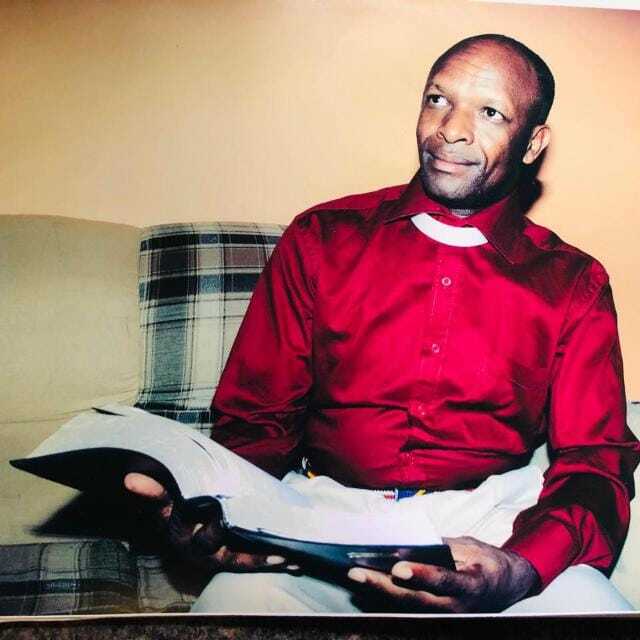
 By Our Reporter,Nakuru.
The family of slain Kenyan journalist William Munuhe Gichuki has renewed its pursuit of justice, formally calling on the United States government to disclose what became of investigations into his death after American officials publicly linked the killing to his role in helping track then Rwandan genocide suspect the late Félicien Kabuga.
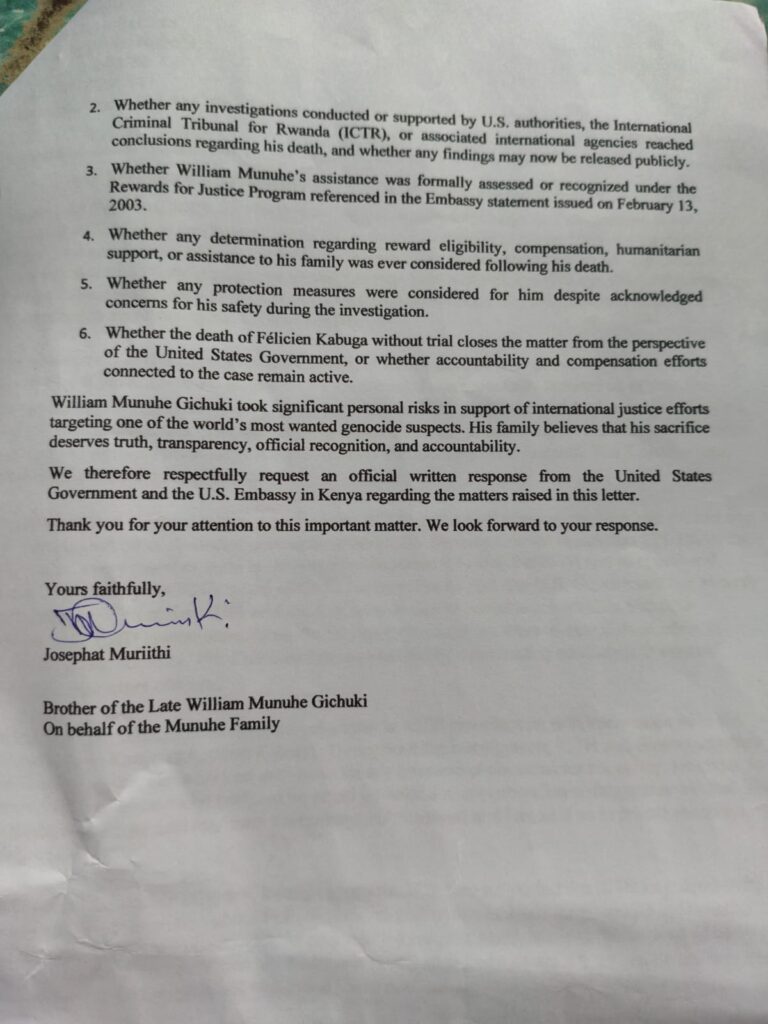
In a letter submitted to U.S. authorities, the family is seeking accountability, transparency, and access to official records concerning the circumstances surrounding Munuhe’s death.
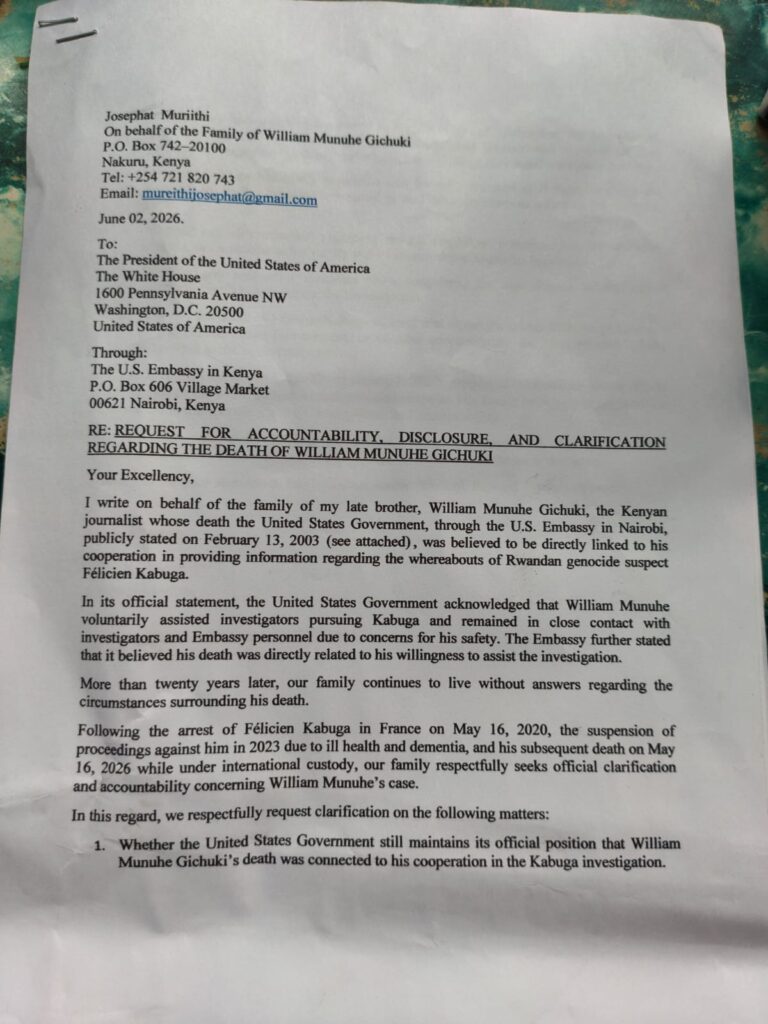
Munuhe once worked for the People Daily.
They argue that more than two decades have passed without clear findings or public explanations regarding the case.
The renewed appeal comes in the wake of significant developments in the Kabuga case.
Kabuga, one of the world’s most wanted fugitives, was arrested in France in May 2020 after more than 20 years on the run.
He was later transferred to The Hague, where legal proceedings were eventually suspended due to his deteriorating health.
According to the family, Kabuga’s capture revived hopes that authorities involved in the international manhunt would finally provide answers regarding the dangers Munuhe faced and the events leading to his death.
“My brother stepped forward believing he was contributing to international justice. More than two decades later, our family still does not know what happened, who was responsible, or whether any meaningful accountability was pursued,” wrote Josephat Muriithi on behalf of the family.
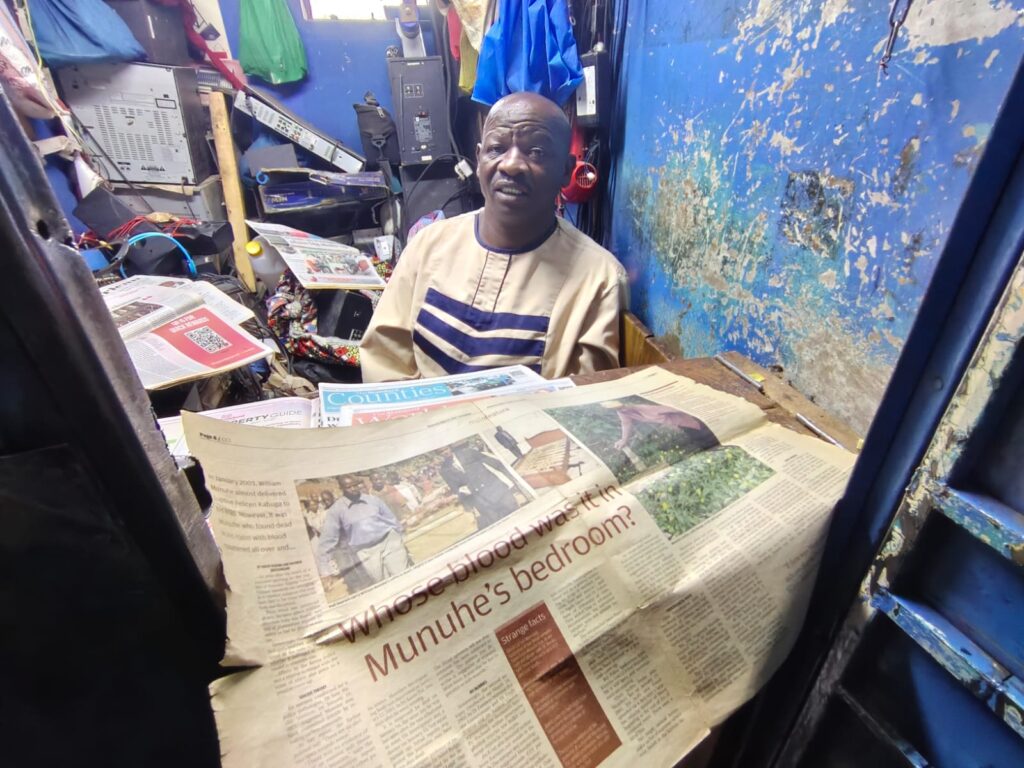
The family’s petition cites a February 13, 2003 statement issued by the U.S. Embassy in Nairobi, in which American officials said they believed Munuhe’s death was directly connected to his willingness to provide information about Kabuga’s whereabouts.
The embassy statement further indicated that Munuhe had voluntarily assisted investigators associated with the International Criminal Tribunal for Rwanda (ICTR) and maintained regular contact with embassy and tribunal personnel due to concerns for his safety.
At the time, U.S. officials acknowledged that the exact circumstances of the journalist’s death remained unclear but urged Kenyan authorities to conduct a thorough investigation while continuing efforts to locate and arrest Kabuga.
In the latest correspondence, the family is seeking clarification on whether the United States still maintains the position expressed in 2003 and whether investigations conducted by American, tribunal, or other international authorities produced findings that can now be released publicly.
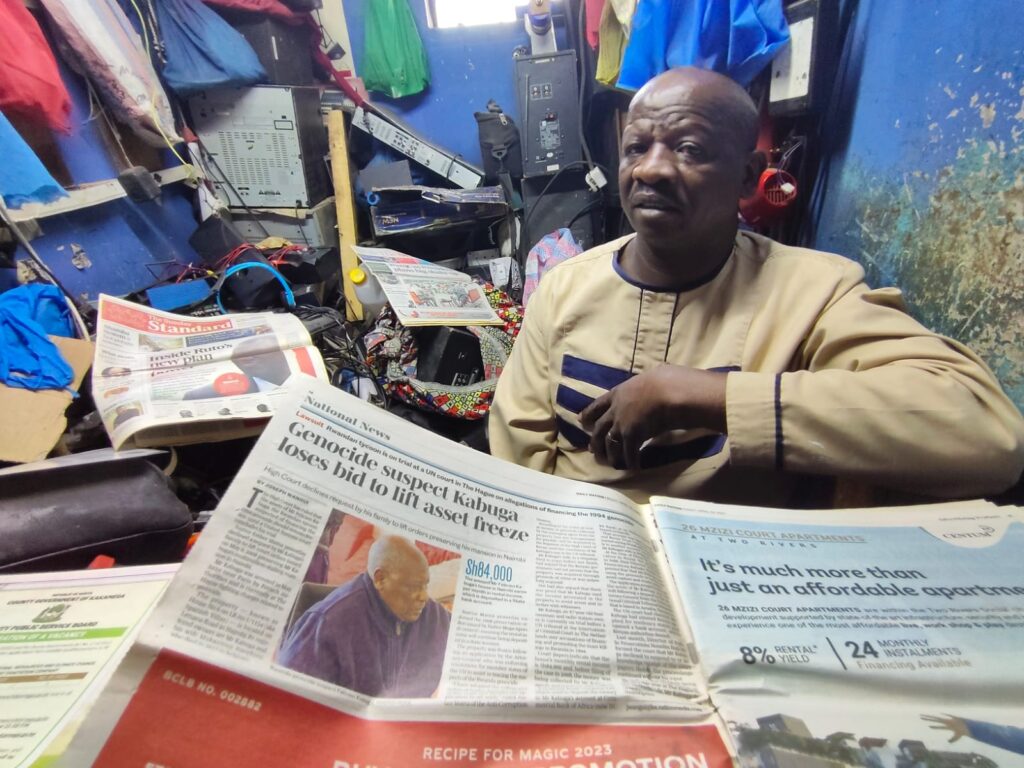
“We are not seeking sympathy. We are seeking documented facts, official records, and a clear account of whether the commitments made after William’s death resulted in any action that can finally be shared,” Josephat stated.
The family is also requesting information on whether Munuhe’s contribution was formally considered under the U.S. Rewards for Justice programme, which offered financial rewards for information leading to the arrest of genocide suspects.
Additional inquiries focus on whether compensation, humanitarian assistance, or other forms of support were considered after his death and whether any protective measures had been discussed despite acknowledged security concerns.
Munuhe was killed during efforts to locate Kabuga, a wealthy Rwandan businessman accused of financing and facilitating the 1994 genocide against Tutsis and moderate Hutus, in which an estimated 800,000 people lost their lives.
Investigative reports published over the years suggested that Munuhe had provided information intended to help authorities lure Kabuga into a planned operation in Kenya.
He was later found dead before the operation could be carried out.
“The death of Félicien Kabuga should not mark the end of efforts to establish the truth about William’s case. Our family believes transparency remains necessary regardless of developments in the genocide proceedings,” Josephat said.
Kabuga was arrested near Paris on May 16, 2020, following a multinational investigation involving international prosecutors and law enforcement agencies.
In 2023, judges ruled that he was unfit to stand trial due to dementia and declining health.
Reports published in May 2026 indicated that Kabuga died while in custody in The Hague, bringing an end to one of the longest-running international manhunts without a completed trial on the genocide charges he faced.
The Munuhe family maintains that Kabuga’s death has only strengthened the need for historical accountability, particularly regarding individuals who assisted international investigators during efforts to locate and apprehend the fugitive across several countries.
[DNK-International@June 7,2026]