DNK International
 By Xavier Lugaga,Busia
Few figures in Uganda’s post independence history embody the fusion of battlefield grit, political influence, and enduring controversy like Salim Saleh.
Decades after the guns of the bush war fell silent, the man once known as a teenage guerrilla fighter remains a quiet but formidable force behind the architecture of Uganda’s military and state power.
Born Caleb Akandwanaho, Saleh’s transformation into a revolutionary began in the 1970’s when he abandoned school to join the armed struggle against the regime of Idi Amin.
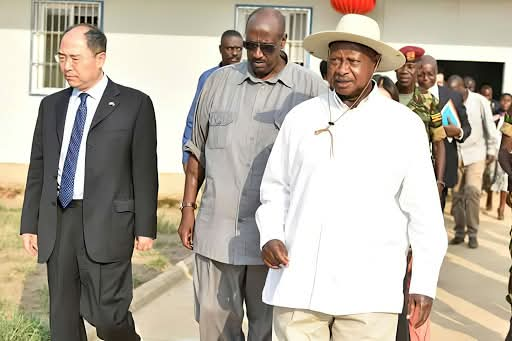
Training under Mozambique’s liberation forces, he quickly rose through the ranks of the rebel networks aligned with his elder brother, Yoweri Museveni (now President since 1986),laying the groundwork for what would become one of Africa’s most resilient military political establishments.
The fall of Amin in 1979 and the chaos that followed only hardened Saleh’s resolve.
During the 1981–1986 bush war, he emerged as one of the most effective field commanders in the National Resistance Army (NRA), leading elite mobile units that executed some of the most decisive operations of the conflict.
When Kampala finally fell in January 1986, it was Saleh’s forces that spearheaded the push that brought Museveni to power and reshaped Uganda’s political trajectory.
In the years that followed, Saleh became central to consolidating the new government’s military dominance.
As operations shifted to northern Uganda, he combined force with negotiation, helping to secure fragile peace arrangements with insurgent groups and laying early foundations for relative stability in the region.
Yet his rise was never without turbulence.
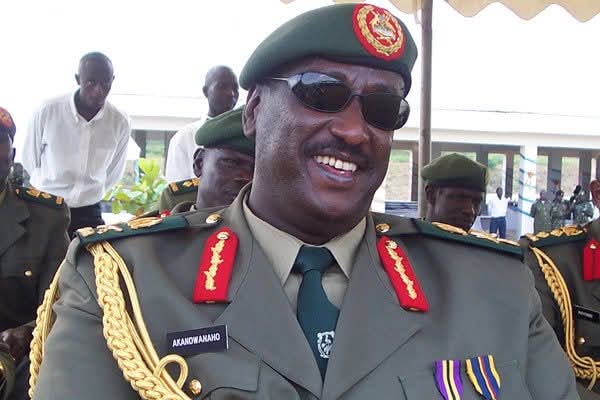
His appointment as Army Commander in 1987 marked the peak of his formal military career, but it was short lived.
In a dramatic turn, he was dismissed in 1989 amid corruption allegations,an episode that revealed the delicate balance between loyalty and accountability within Uganda’s ruling circle.
Despite the setback, Saleh never truly exited the corridors of power.
Instead, he reinvented his influence.
Through roles such as Senior Presidential Advisor and later as a key figure in Uganda’s reserve forces, Saleh positioned himself as a strategist rather than a frontline commander.
Over time, he became deeply embedded in Uganda’s security, economic, and patronage networks, often operating away from public scrutiny but with unmistakable impact.
His regional footprint has also drawn attention.
Saleh has long been linked to the early dynamics of the Rwandan Patriotic Front (RPF), whose members once fought alongside NRA forces.
His interactions with figures like Fred Rwigyema reflect the intertwined histories of Uganda’s and Rwanda’s military elites,relationships that have shaped security politics across the Great Lakes region.
In recent years, Saleh has remained influential through his involvement in veterans’ affairs, wealth creation initiatives, and informal advisory roles within Uganda’s security establishment.
While he rarely occupies the spotlight, his presence is consistently felt in key decisions touching on military organization, national stability, and regime continuity.
To supporters, Saleh is a patriot and master strategist who helped secure Uganda’s modern state.
To critics, he represents the blurred lines between military power, political authority, and personal networks that have defined the country’s governance for decades.
What remains indisputable is this: long after the bush war generation took power, the shadow of Salim Saleh still looms large over Uganda’s military and political landscape quiet, calculating, and enduring.
Want to be featured? or have a personality want to know about him or her:
📞WhatsApp: ±2540703633820,±254754168624
✉️ Email: dailynewskenya0@gmail.com
🗓️ [DNK-International@April
18,2026]