DNK International
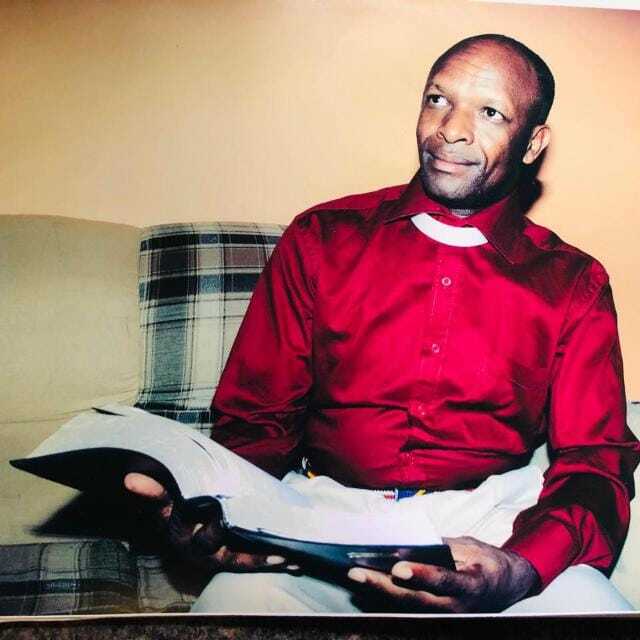
 Engineer Edward Mwirigi Kinyua has found himself at the centre of a growing national debate over the cost of living barely two weeks after assuming office as the substantive Director General of the Energy and Petroleum Regulatory Authority (EPRA)
His leadership is facing an early test following a sharp increase in fuel prices.
Kinyua, an experienced energy and petroleum sector professional, officially took over as EPRA Director General on October 1, 2026, following a competitive recruitment process that saw him rise through the ranks of the same institution where he had worked for years.

His appointment came at a critical moment for Kenya’s energy sector, with consumers, transport operators, businesses and households increasingly concerned about the cost of petroleum products and their impact on the economy.
The latest EPRA review, announced on Wednesday, October 14, has intensified scrutiny of the regulator after the authority raised the maximum retail price of super petrol by Sh12.93 per litre, diesel by Sh9.90 and kerosene by approximately Sh28.49.
Under the new prices, which takes effect at midnight on October 15, super petrol will retail at Sh226.96 per litre in Nairobi, while diesel will cost Sh227.76 and kerosene Sh219.87.
The increase in kerosene, a product widely used by low income households for cooking and lighting, is particularly concerning because of its potential impact on families already struggling with rising living expenses.
The increases have placed Kinyua under intense public scrutiny, with the central question being whether EPRA can protect consumers from excessive costs while implementing a petroleum pricing framework influenced by international oil prices, importation expenses, taxes and regulatory levies.
The latest increase has been described as one of the most painful adjustments for consumers, particularly kerosene in Kenya’s history.
Born into a professional environment that would eventually lead him into engineering and energy regulation, Kinyua has built a career spanning more than 14 years in the energy sector, according to his official EPRA profile.

His academic qualifications include a Master of Science degree in Energy Management from the University of Nairobi and a Bachelor of Technology degree in Mechanical and Production Engineering from Moi University.
Before rising to the top position at EPRA, Kinyua gained experience in the private sector, including working at Total Kenya, where he served in petroleum related roles.
His experience in the petroleum industry is said to have given him exposure to the commercial and operational aspects of fuel supply before he moved into regulatory work.
Kinyua joined EPRA in 2010 and later served as Director of Petroleum and Gas, a position in which he was responsible for developing and implementing strategies for regulating Kenya’s petroleum subsector.
His work involved matters relating to petroleum supply, market regulation and the mechanisms used to determine the maximum retail prices announced by EPRA every month.
His appointment as Director General as he told Daily News Kenya-International, represented the culmination of years of professional experience within the institution rather than an entry into the energy regulator from outside.
The appointment followed a recruitment process conducted by the EPRA board.
Kinyua succeeded the former Director General Daniel Kiptoo who resigned earlier in 2026 following his arrest in connection with investigations into allegations surrounding the importation of fuel that allegedly failed to meet regulatory standards.
As Director General,Kinyua is responsible for providing strategic leadership and overseeing the regulation of Kenya’s energy sector, including electricity generation, transmission, distribution and retail, as well as petroleum operations.
His mandate also covers the enforcement of regulatory standards and the protection of consumers and other players in the energy industry.
However, the latest fuel price announcement has placed petroleum regulation at the centre of public attention.
EPRA attributed the latest increases to a sharp rise in the average landed cost of imported petroleum products during September 2026.

An increase at the pump according to a cross section of Kenyans we talked to, can therefore trigger further price adjustments across the economy, depending on how businesses respond.
Motorists face higher refuelling costs, while public service vehicle operators may seek fare increases to compensate for higher operating expenses.
Traders and transport companies may also pass some of the additional costs to consumers.
Low income households face particular pressure because they spend a substantial share of their earnings on essential goods and services, leaving them with limited room to absorb additional expenses.
Kerosene users are especially vulnerable to the latest adjustment because the product serves as an important household energy source for families that cannot easily switch to electricity or liquefied petroleum gas.
Some consumers question why fuel prices remain high even when international oil prices decline, while others argue that the government should review taxes and levies to reduce pressure on households.
His experience within EPRA could provide an advantage because he is familiar with the institution’s operations, its regulatory responsibilities and the technical issues affecting the sector.
At the same time, rising public expectations mean that experience alone may not be enough to secure confidence in his leadership.
Consumers will want to understand why prices change, how the different components of the pricing formula are calculated and what measures can be taken to limit unnecessary costs within the supply chain.
Transport operators and businesses will also be watching to see whether the authority can maintain stability and predictability in the petroleum market.
The immediate challenge for Kinyua is to communicate the reasons behind the latest increases without appearing disconnected from the economic difficulties facing ordinary Kenyans.
His ability to explain the distinction between international market pressures and the costs that can be addressed through domestic policy will be critical to the credibility of the regulator.
He will also need to demonstrate that EPRA is not merely an institution that announces higher prices but an effective regulator capable of enforcing standards, monitoring industry practices and ensuring that consumers receive value for money.
With the country approaching the 2027 General Election period, the cost of living is likely to remain a major political and economic issue.
Fuel prices, in particular, are expected to attract attention because of their direct relationship with transport costs, food prices and business expenses.
For Kinyua, the timing of the latest increase presents an early test of his ability to lead the authority through a difficult period while maintaining public confidence.
For millions of Kenyans, the immediate question remains how to cope with rising fuel costs.
Want to be featured, or know a personality who deserves recognition?
📞 WhatsApp: +254 703 633820 / +254 754 168624
✉️ Email: dailynewskenya0@gmail.com
SUPPORT CITIZEN JOURNALISM
Help us keep independent, community-focused journalism alive.
Paybill: 222111
Account No.: 3179512
Your support helps us report, inform and amplify stories from communities that matter.
Thank you for supporting citizen journalism.
🗓️ [Daily News Kenya-International@October 15,2026]