DNK International
By Our Correspondent,Rongai
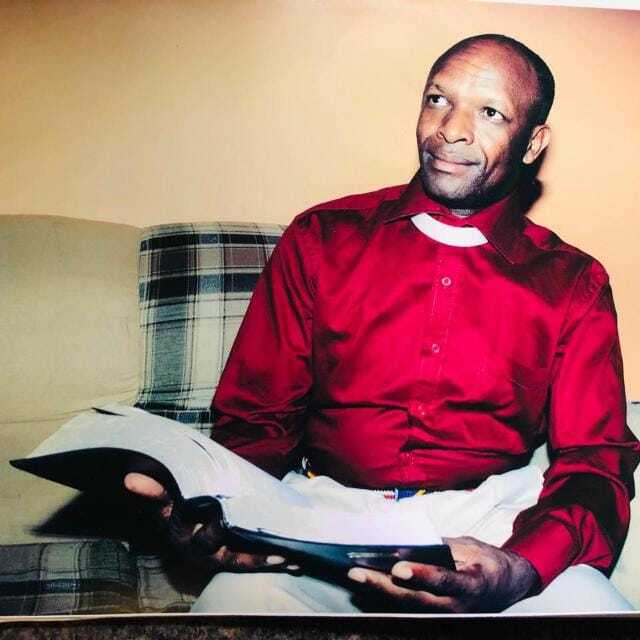
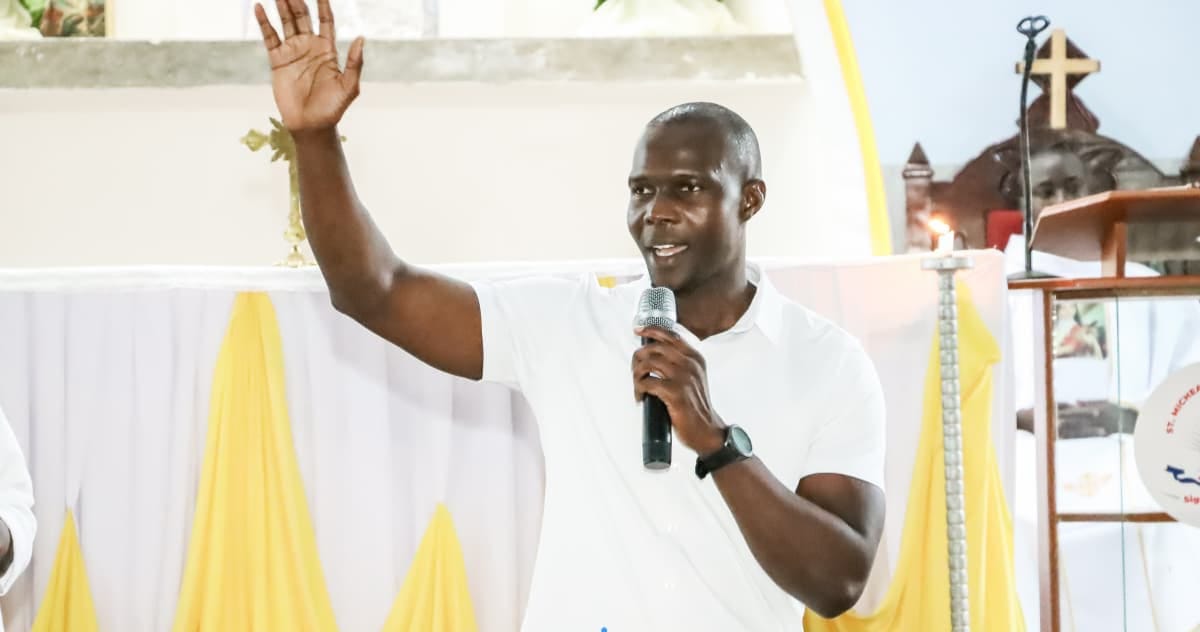
Lawyer Shadrack Wambui a human rights crusader who rose from the slums of Mathare to become a prominent figure in Kenya’s legal fraternity, is seeking to translate his courtroom experience and community activism into political leadership as he prepares to contest the Kajiado North parliamentary seat in the 2027 General Election.
He’s a member of the Democracy for Citizens Party (DCP) which is led by former Deputy President Rigathi Gachagua.
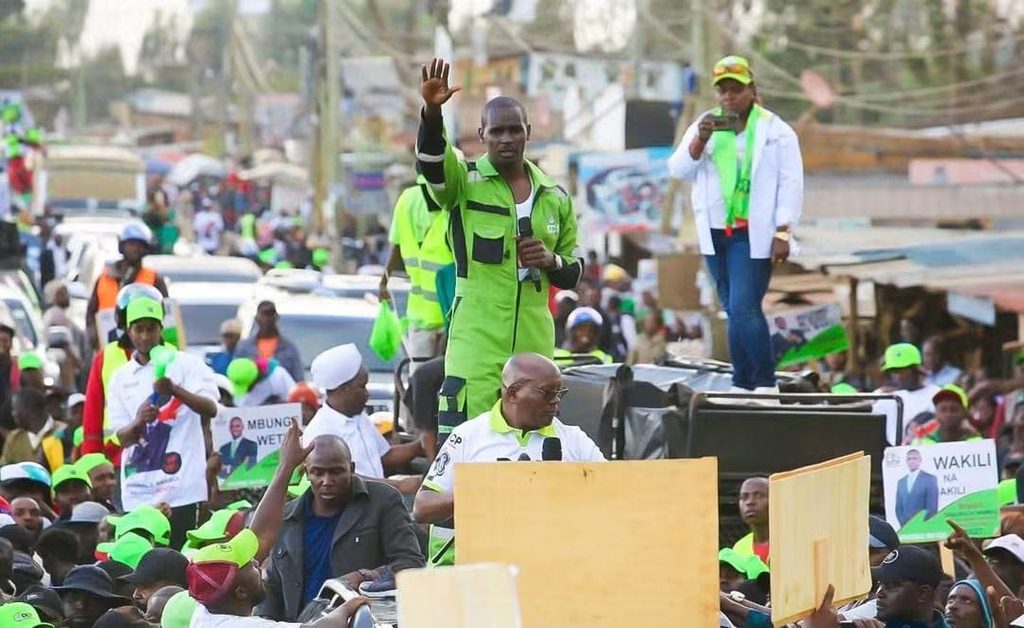
Wambui’s journey is a story of resilience, determination and an enduring commitment to social justice.
Having experienced the challenges of growing up in one of Nairobi’s informal settlements, he has built a legal career around representing vulnerable communities, challenging injustices and defending the rights of people who struggle to access legal services.
He was born and raised in Mathare, particularly the Bondeni area.

In a previous chat with Daily News Kenya-International, Wambui spoke candidly about how poverty, police encounters and the loss of friends to violence shaped his outlook on life and influenced his decision to study law.
He recalled that his mother sold traditional liquor to raise money for his education, but police raids and the destruction of the liquor sometimes threatened the family’s ability to pay school fees.
Wambui admitted that as a young boy, he once contemplated becoming an armed robber because he associated crime with resistance to police harassment.
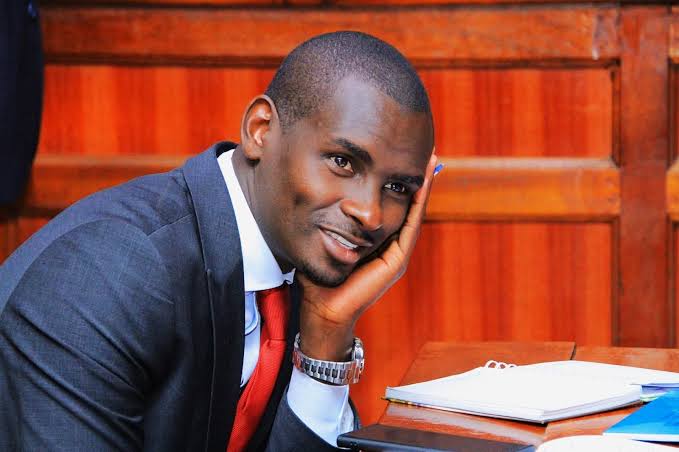
However, discovering that lawyers could challenge injustice through the courts changed his thinking and gave him a different direction.
That realisation eventually set him on a path towards becoming an advocate of the High Court of Kenya, a profession he has used to champion the rights of disadvantaged people.
He attended Maseno School before proceeding to university to study law.
He studied at the Catholic University of Eastern Africa (CUEA) where he also served as a student leader.

From CUEA he proceeded to the Kenya School of Law for his professional training and was admitted to the bar on March 27, 2018.
His education was not without financial difficulties.
Wambui acknowledged the contribution of his family, his late grandmother, community support and student financing in helping him complete his studies.
He also obtained financial assistance from the Kenya School of Law to meet the costs of his professional training.
His experience navigating these obstacles has informed his longstanding interest in expanding access to education, legal representation and opportunities for young people from disadvantaged backgrounds.
Away from the courtroom, Wambui is an accomplished amateur boxer whose interest in the sport dates back to his childhood.
He trained at the Ongata Rongai Boxing Club before joining Kayole Wings Miller Boxing Club in 2015, where he trained under the late coach Muchoki Mwangi.
Boxing became an important part of his personal development, helping him channel his energy into discipline, physical fitness and constructive engagement with other young people.
In interview, he explained how the sport helped him manage his temperament and avoid responding to provocation with violence.
He once remarked that people who knew him believed he responded to criticism with his fists, but boxing eventually taught him that he could walk away rather than fight.
His passion for boxing also became intertwined with his legal work following the death of his coach, Muchoki Mwangi, whose body was detained at Kenyatta National Hospital over an outstanding hospital bill of approximately Sh700,000.

Wambui helped initiate legal proceedings seeking the release of the remains, and the court ordered the hospital to release the body unconditionally.
The experience became one of the defining moments of his early legal career, demonstrating to him that the law could provide practical solutions to problems affecting ordinary people.
Wambui has consistently maintained that his professional journey is inseparable from the community that raised him.
His message to young people struggling with poverty has been that their circumstances should not determine their future, provided they remain committed to their ambitions and refuse to surrender to discouragement.
His commitment to community service led to the establishment of Sheria Mtaani, a grassroots legal aid initiative that he helped develop with fellow young advocates.
The organisation was conceived to address the difficulties faced by residents of informal settlements who cannot afford private legal services.
Sheria Mtaani focuses on providing legal assistance to disadvantaged members of society, including residents of Mathare, Kayole and other underserved communities.
Its work has included assisting people who cannot afford lawyers, supporting children in conflict with the law and taking up public interest matters involving alleged violations of constitutional rights.
The organisation has also sought to make legal services accessible within the communities that need them most, rather than requiring residents to travel to expensive law offices in the city.

Wambui has worked closely with senior lawyer Danstan Omari, whom he has described as his mentor and former lecturer.
According to him,Omari has supported his professional development and community legal aid work which has helped him gain experience through legal practice and participation in prominent court cases.
Their professional association has brought Wambui into the public spotlight through matters involving constitutional rights, criminal justice, land disputes and the rights of religious minorities.
One of the cases that brought him national recognition involved a Rastafarian student who was denied admission to a school in Kibera because of her dreadlocks.
Wambui joined the legal effort to challenge the discrimination, working alongside other advocates, including Ochiel Dudley.
The case highlighted questions surrounding religious freedom, personal identity and the rights of students within Kenya’s education system.
For Wambui, the matter was particularly significant because he had grown up around members of the Rastafarian community and was familiar with the cultural and religious significance of their beliefs and appearance.
His work in this area has since expanded to include representing members of the Rastafari community in a constitutional petition seeking recognition of their right to use cannabis, commonly known as marijuana or bhang, for religious and spiritual purposes.
Working alongside Omari and other lawyers, Wambui has argued that the criminalisation of cannabis use for religious observance infringes on the community’s constitutional freedom of religion and exposes its members to discrimination and harassment.
The petition also raised concerns about alleged police harassment, searches and arrests involving members of the community.
However, the High Court dismissed the petition in this year ruling that the petitioners had not established sufficient legal grounds for an exemption from the laws prohibiting cannabis use.
The ruling did not end the public debate surrounding religious freedom and cannabis regulation, and Wambui indicated that the legal fight would continue through an appeal.
His involvement in the case has placed him among the advocates at the centre of an ongoing national discussion about constitutional rights, minority religious practices and the country’s narcotics laws.
Wambui has also participated in other high profile legal matters.
These include work connected to the murder case involving Dutch businessman Tob Cohen and the divorce dispute between Aldai MP Mary Anne Kittany and former cabinet Secretary Mithika Linturi.
He has also challenged professional requirements affecting newly admitted advocates, arguing that financial barriers should not prevent young lawyers from entering the profession after completing their studies.
His legal philosophy has consistently emphasised that every person, regardless of their circumstances or the allegations they face, deserves representation and a fair hearing.
In explaining his approach to legal practice, he has argued that an advocate’s responsibility is not to pass judgment on a client before the court has heard the case, but to ensure that justice is pursued through the proper legal process.
His experience in public interest litigation has now become particularly relevant to his political ambitions in Kajiado North, a constituency that includes areas such as Ongata Rongai, Ngong and parts of the wider metropolitan region, where land ownership, development, taxation and urban expansion remain important public issues.
Although Wambui’s political ambitions have attracted attention, his most prominent interventions in the constituency so far have involved disputes over land rates and the legality of county government decisions affecting property owners.
Through Sheria Mtaani, he has challenged the imposition of land rates on freehold properties and disputed changes to land related charges by the Kajiado County Government.
In January 2026, the Environment and Land Court in Kajiado delivered a judgment in a petition brought by Sheria Mtaani and other petitioners challenging provisions of the Kajiado County Finance Act, 2023.
The court found constitutional and legal shortcomings in the process used to impose certain land rates and vary land rent, including failures relating to public participation and the applicable legal framework.
It declared the contested provisions unconstitutional and invalid.
The dispute resurfaced after the county introduced further land rate provisions in its 2026 Finance Act.
In September, Wambui announced another court order suspending the disputed charges pending the determination of a fresh petition.
The land rate dispute has become one of his most visible interventions in Kajiado County, allowing him to present himself as a lawyer willing to challenge decisions that he believes impose an unfair financial burden on residents.
He has argued that property owners should not be compelled to pay charges that lack a sound legal basis, particularly where questions arise over constitutional protections, public participation and the classification of land.
Another significant intervention came in October 2026, when Wambui, through Sheria Mtaani, challenged the use of a Member of Parliament’s name, image and political slogans on taxpayer funded public projects in Kajiado North.
The case targeted the branding of public facilities and projects associated with the constituency’s sitting MP, Onesmus Ngogoyo.
The High Court ruled on October 27 that personal branding of publicly funded projects was unconstitutional and ordered the removal of the disputed branding in the case before it.
The development further placed Wambui in the political spotlight as he prepares to challenge for the same parliamentary seat.
His legal activism has therefore become a central part of his emerging political identity, particularly on matters involving landowners, public accountability and the use of public resources.
Wambui’s decision to contest the Kajiado North seat on the DCP ticket represents a transition from courtroom advocacy to elective politics.
His supporters are likely to view his legal-aid work and court interventions as evidence of his willingness to challenge authority, while his opponents may scrutinise how he intends to convert legal victories into practical development programmes.
For a constituency experiencing rapid urbanisation, population growth and increasing pressure on land and public services, the central question will be whether his experience in litigation can translate into effective representation in Parliament.
As an aspiring MP, Wambui will be expected to articulate clear positions on employment, education, healthcare, road infrastructure, security, housing, land administration and the provision of essential services.
His background in Mathare may also influence his approach to youth empowerment, particularly for young people facing unemployment, poverty and limited access to opportunities.
He has previously expressed the hope that young people from informal settlements can look at his achievements and recognise that their upbringing does not have to determine their destiny.
His story is also closely associated with his late grandmother, whom he has identified as one of his greatest inspirations, alongside his boxing coach and professional mentor, Omari.
While his legal career has earned him recognition, his political journey is still unfolding.
His candidature will ultimately be tested by voters in Kajiado North, who will weigh his record in public interest litigation against the wider responsibilities of an elected representative.
Wambui’s rise from Mathare to the legal profession illustrates how personal experiences can shape a career devoted to advocacy and public service.
His move into politics now presents him with a different challenge: persuading voters that the skills he has developed in defending clients and challenging government decisions can also help deliver accountable leadership and tangible improvements in their daily lives.
For the lawyer who once viewed the slum of Mathare as a place of limited choices, the 2027 election offers an opportunity to seek a new platform for pursuing the causes that have defined his career.
Want to be featured, or know a personality who deserves recognition?
📞 WhatsApp: +254 703 633820 / +254 754 168624
✉️ Email: dailynewskenya0@gmail.com
SUPPORT CITIZEN JOURNALISM
Help us keep independent, community-focused journalism alive.
Paybill: 222111
Account No.: 3179512
Your support helps us report, inform and amplify stories from communities that matter.
Thank you for supporting citizen journalism.
🗓️ [Daily News Kenya-International@October 31,2026]